Shrines & temples · Nikko
Nikko from the red bridge to the carved gate
Two hours north of Tokyo, a forested hillside holds the shogun Ieyasu's shrine, a temple, a shrine to the mountains and a second mausoleum. Here is the order that makes one day enough.
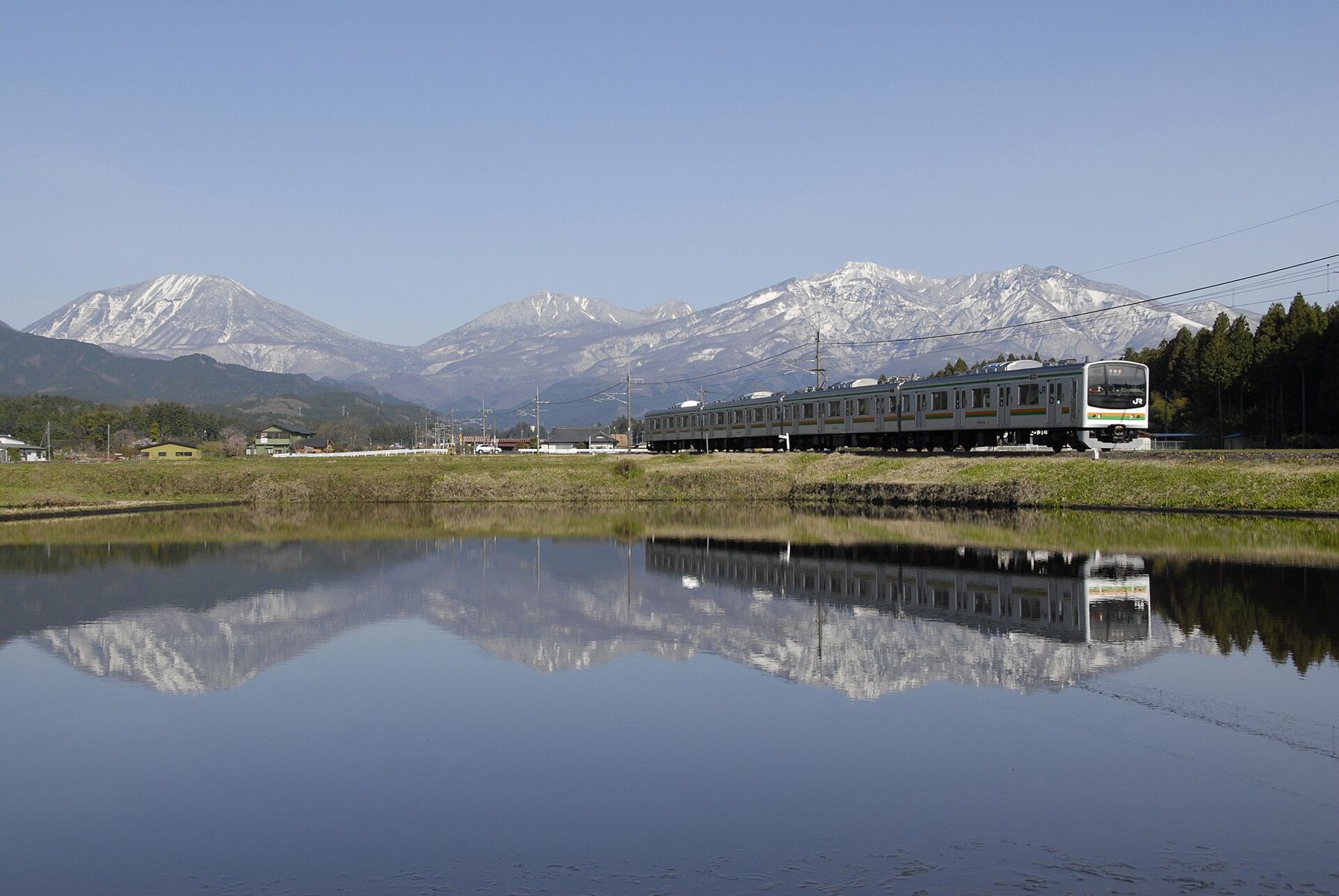
The approach to Nikko is part of the trip. After the long run north across the Kanto plain the train starts to climb, and the last half hour runs between rice fields, then rows of very tall, very straight cedars. By the time you step out at Tobu-Nikko station the air is cooler than Tokyo by several degrees, and the mountains are close.
The Shrines and Temples of Nikko were listed together as a UNESCO World Heritage Site in 1999. They are not one complex but several, set on a wooded slope above the Daiya River and run by different religious bodies: Tosho-gu, Futarasan Shrine and the temple of Rinno-ji, which also cares for the mausoleum called Taiyuin. Between them they hold more than a hundred listed buildings. The trick is to see the busiest one before everyone else arrives.
Leaving Asakusa early
Nikko sits in Tochigi Prefecture, in the outer ring of trips at around two hours. The simplest way is the Tobu line from Asakusa (also stopping at Kita-Senju and Tokyo Skytree stations) to Tobu-Nikko, on a reserved-seat limited express. Some services need a change at Shimo-Imaichi, so check which train you are on. The alternative is JR: the Tohoku Shinkansen to Utsunomiya, then the local JR Nikko line to JR Nikko station, a short walk from the Tobu one. There are also through limited expresses from Shinjuku that use both companies' tracks.
Regional passes cover the Tobu trains and local buses here in some form; the guide to which ticket for a day out explains in general terms when one makes sense. Aim for a train that leaves Tokyo before eight, as suggested in first trains, last trains and the suitcase question. The shrines and temples close in the late afternoon, earlier in winter, and the day goes faster than you expect.
The red bridge over the Daiya
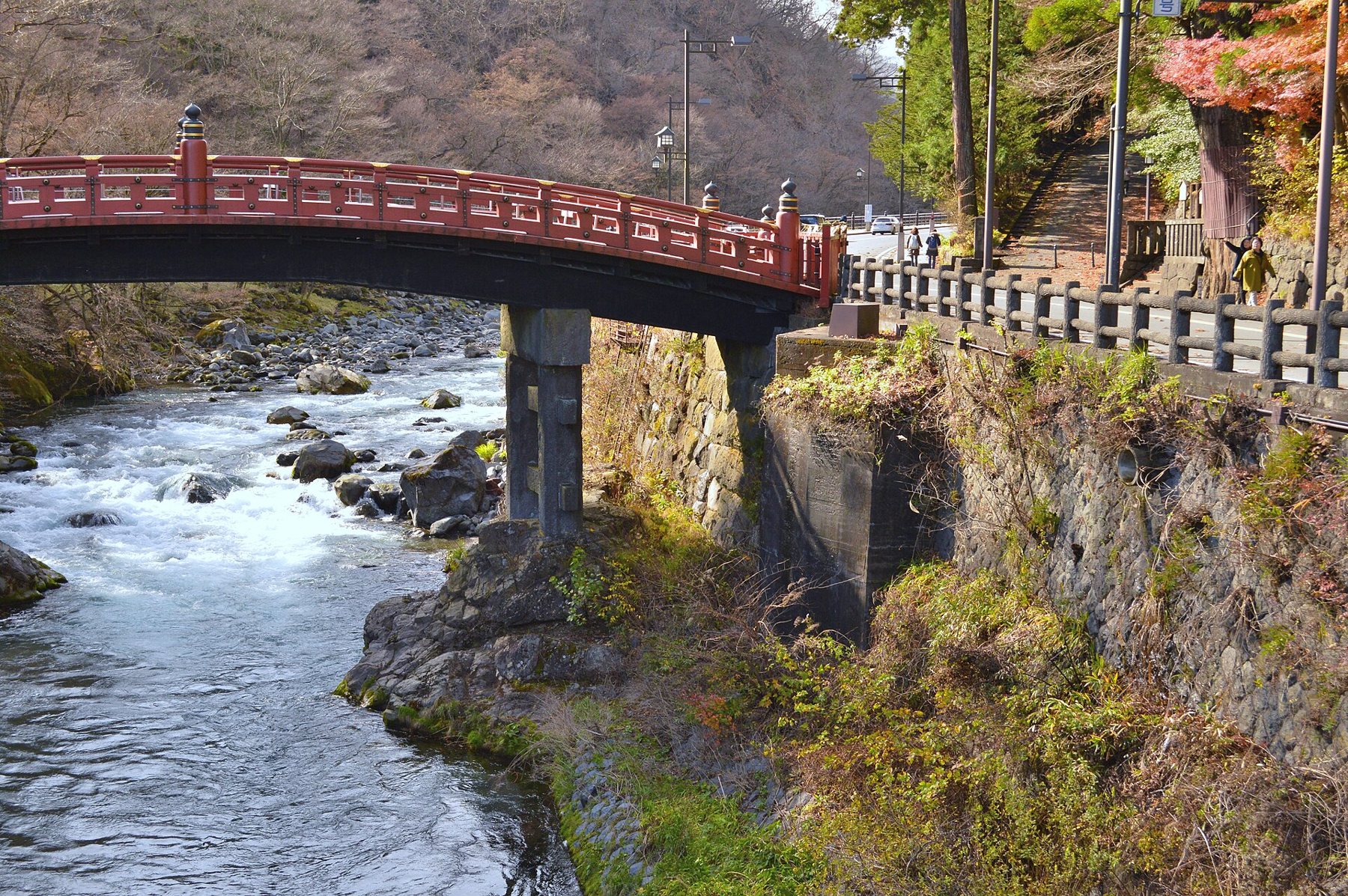
From the station, walk up the gently climbing main street for about 20 minutes, or take a local bus. At the top, where the road meets the river, is Shinkyo, the sacred bridge: an arched bridge lacquered vermilion, spanning a fast, clear river between wooded banks. Legend says that when the monk Shodo Shonin, who founded Nikko's first temple in the 8th century, could not cross the torrent here, a god appeared and threw two serpents across the water, and sedge grew on their backs to make a bridge.
The present bridge was rebuilt after a flood at the start of the 20th century. It belongs to Futarasan Shrine, and for a small fee you can walk onto it; most people look from the road bridge alongside, which gives the classic view. In the morning light, with mist still on the river, it is the image of Nikko people carry home.
Tosho-gu first, before the coaches
Cross the road and climb the stone steps opposite. Rinno-ji is the first complex you reach, but if it is early, walk on past it up the broad avenue to Tosho-gu, which fills fastest of all once the tour buses arrive.
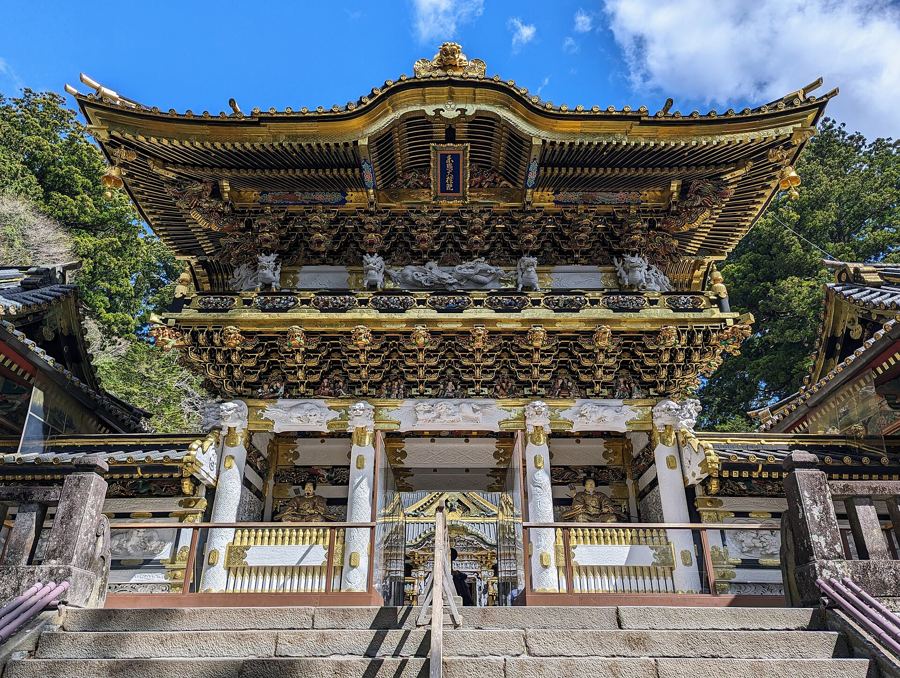
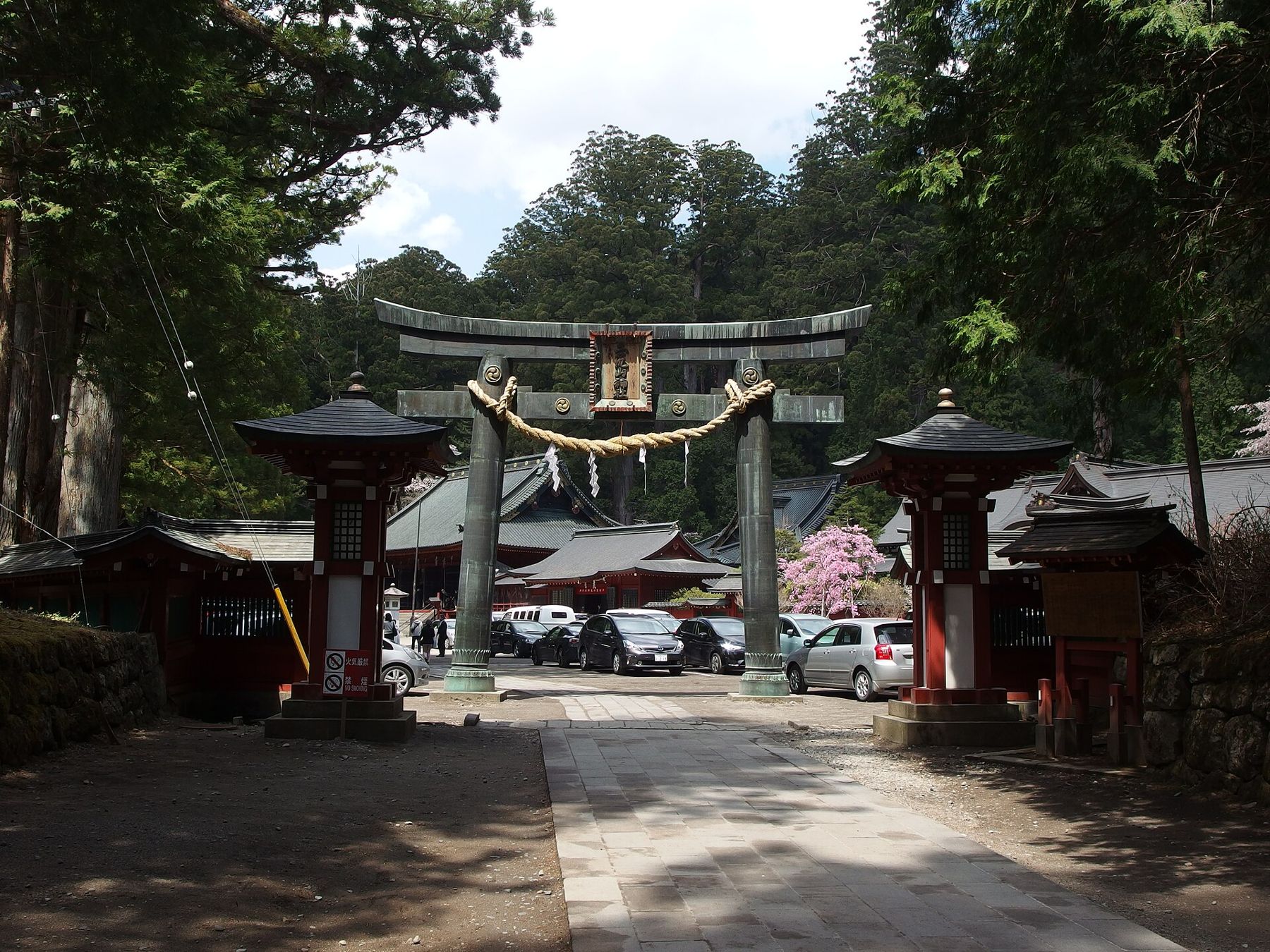
Tosho-gu is the shrine where Tokugawa Ieyasu, founder of the Tokugawa shogunate, is enshrined as a deity. A simpler shrine was built after his death in 1616, and his grandson Iemitsu rebuilt it on a grand scale in the 1630s. Almost every surface is carved, lacquered and gilded. Past the five-storey pagoda and the first gate you reach the sacred stable with its famous monkeys, then the Yomeimon, the great white and gold gate, and beyond it the main halls. A long climb of stone steps through the cedars leads behind them to Ieyasu's tomb, a plain bronze pagoda in a quiet enclosure. The carvings deserve a guide of their own, and they have one: reading the carvings at Tosho-gu, panel by panel.
The trick is to see the busiest one before everyone else arrives.
Some halls require you to take off your shoes, and photography is not allowed in some interiors. Go in with the flow, keep your voice down, and give way to people praying.
Rinno-ji and the Three Buddha Hall
Rinno-ji is the Tendai Buddhist temple that grew from Shodo Shonin's original foundation. Its largest building, the Sanbutsudo or Three Buddha Hall, is the biggest wooden building in Nikko. Inside sit three huge gilded statues, the Amida Buddha and two forms of Kannon, linked with the deities of Nikko's three sacred mountains. The hall went through a long restoration in recent years, so older photographs may show it under a vast temporary cover. Its garden, Shoyoen, is small and especially lovely in autumn.
Futarasan Shrine and Taiyuin
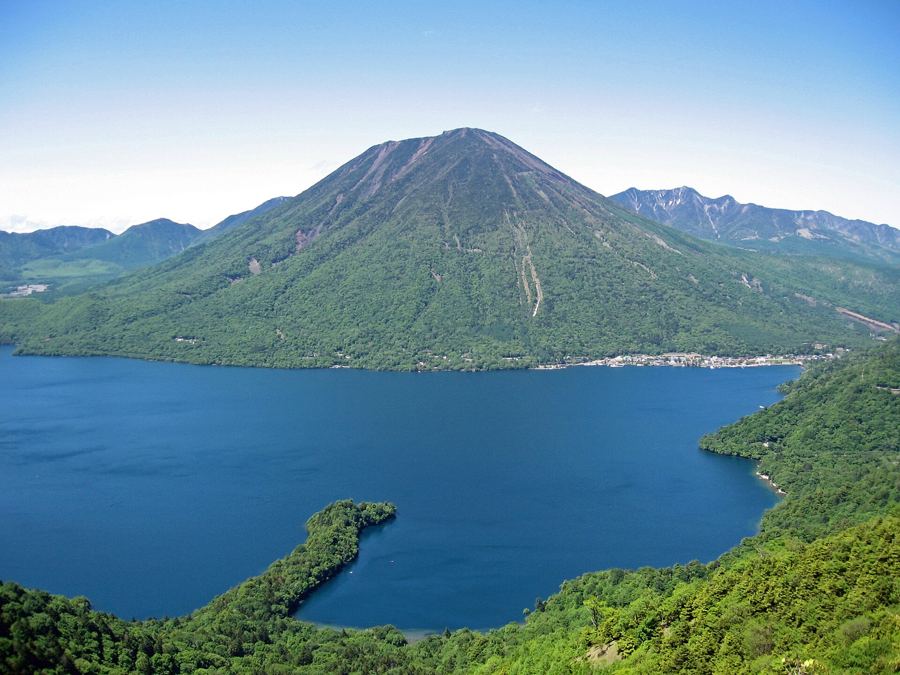
From Tosho-gu, a stone-paved lane lined with lanterns and cedars leads west to Futarasan Shrine. This is the shrine to the mountains themselves, above all Mount Nantai, the volcano that rises over Lake Chuzenji. It is older in spirit than Tosho-gu, quieter, and greener. Many people come for its blessings on relationships, and its grounds hold an old bronze lantern scarred with sword cuts, the subject of a ghost story.
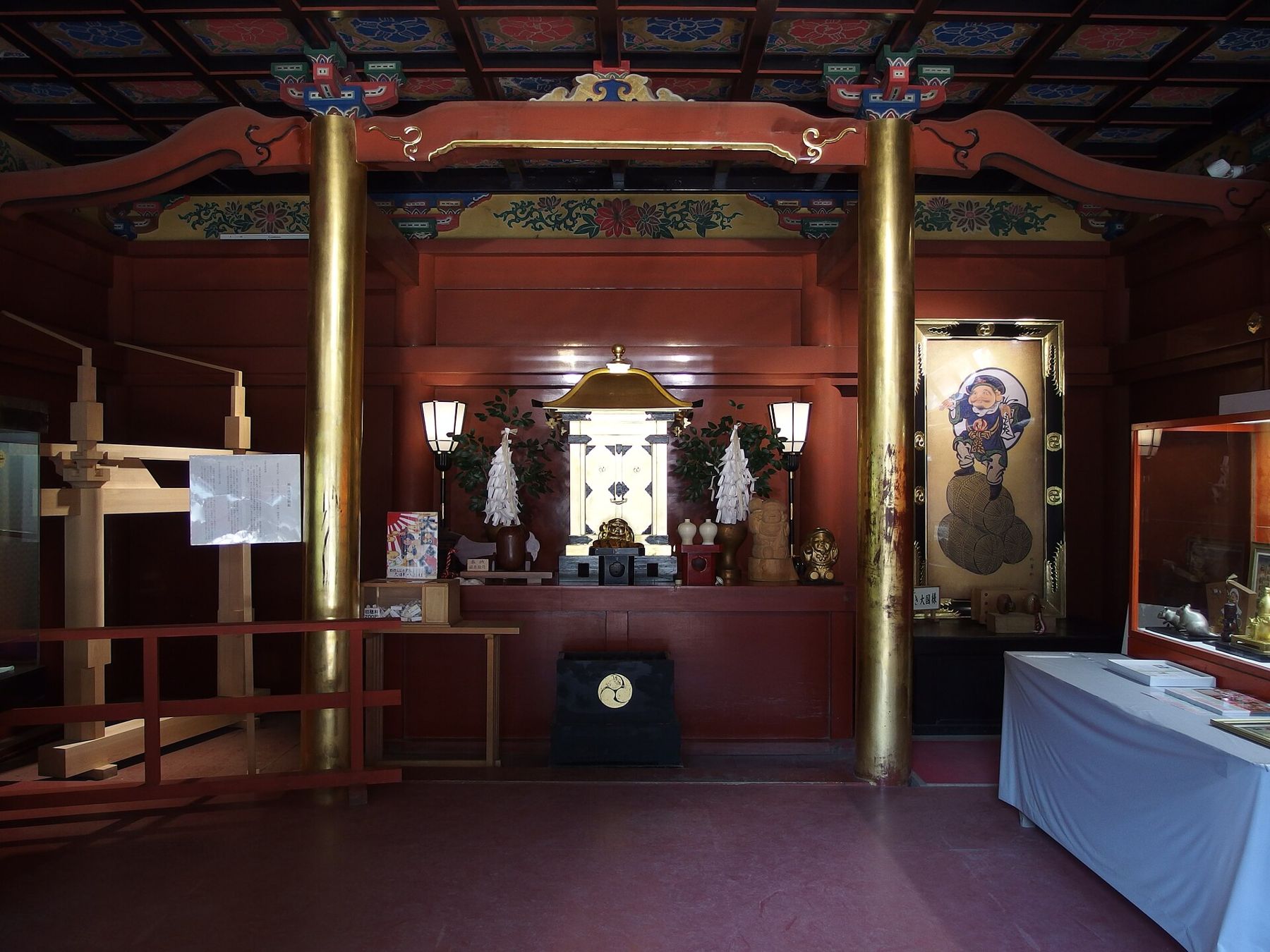
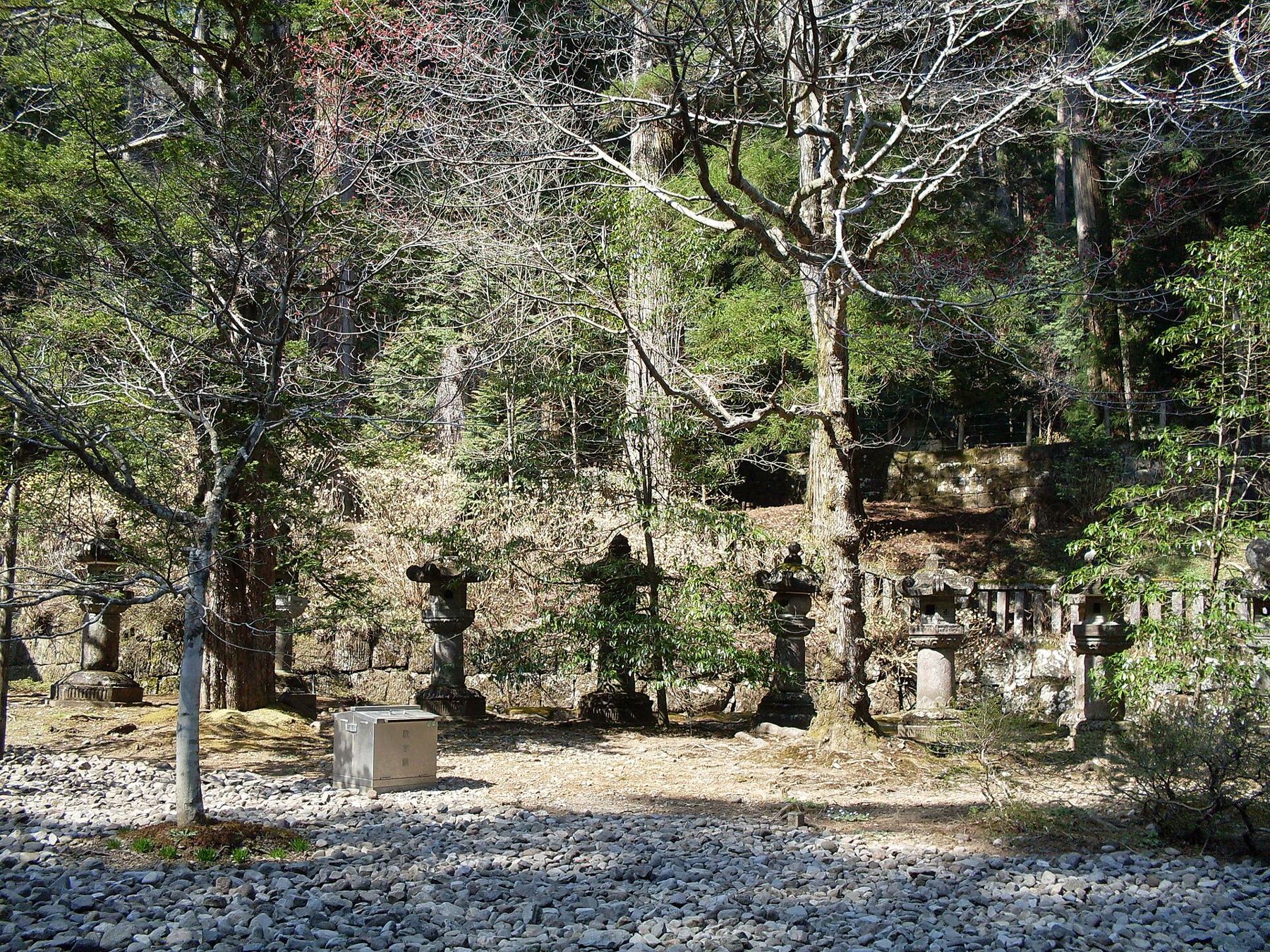
Next door is Taiyuin, the mausoleum of Iemitsu, the grandson who built the great Tosho-gu. He asked that his own shrine not outshine his grandfather's, and it is smaller and darker in colour, black and gold more than white and gold. It is also, for many visitors, the more moving of the two: you climb through a sequence of gates, each a little higher on the hillside, past guardian figures and rows of lanterns, and far fewer people make the walk. If you have time for only one quiet place in Nikko, make it this.
The river, the cedars and the way home
If you still have legs, walk about 20 minutes west along the river to Kanmangafuchi, a short gorge where the Daiya runs through dark volcanic rock. A long row of stone Jizo statues in red caps and bibs lines the path. They are said to be impossible to count the same way twice.
On the way back to the station, watch for the cedars. The Nikko Cedar Avenue is a set of old roads leading to Nikko lined with thousands of Japanese cedars, planted in the early 17th century by a lord who dedicated them to Ieyasu's shrine. Stretches of it run near Imaichi, and walking a section is a good use of a spare hour.
Nikko is also the gateway to the high country above it. Buses climb the hairpins of the Irohazaka to Lake Chuzenji and Kegon Falls, which is a full day on its own. Staying a night lets you do both without rushing, and gives you the shrines in the cool early morning, before the first trains from Tokyo arrive.