First trains, last trains and the suitcase question
Most day trips are won or lost at the station: the hour you leave, the train you catch back and what you are carrying. A little planning on all three changes the whole day.
The trips on this site are mostly an hour or two from central Tokyo, which makes them easy to take for granted. The difference between a good day and a frustrating one is usually decided before you arrive: whether you got there before the crowds, whether you are dragging a suitcase, and whether you know when the last useful train leaves. None of it is difficult. It is just easy to skip.
Why leave before eight
Almost every popular day trip from Tokyo fills up between ten in the morning and three in the afternoon. Tour coaches arrive mid-morning; the people who slept in arrive at the same time. If you are on a train before eight, you reach most destinations by nine or half past, and you get one or two hours of quiet streets, open paths and empty viewpoints. At places such as the shrines of Nikko or the storehouse street in Kawagoe, that is the whole difference between seeing the place and seeing other visitors.
There are practical reasons too. Mountain views are usually clearest early, before cloud builds. Limited express seats on the first trains of the day are easier to get. And starting early leaves room for the thing that always happens: the bus that is full, the queue for the ropeway, the extra hour you want to spend somewhere.
The one catch is the morning rush inside Tokyo. Commuter trains on weekdays are at their most crowded roughly between half past seven and half past nine. If you are carrying anything larger than a day bag, either leave before the rush or travel on a weekend, when the early trains are calm.
The last train is earlier than you think
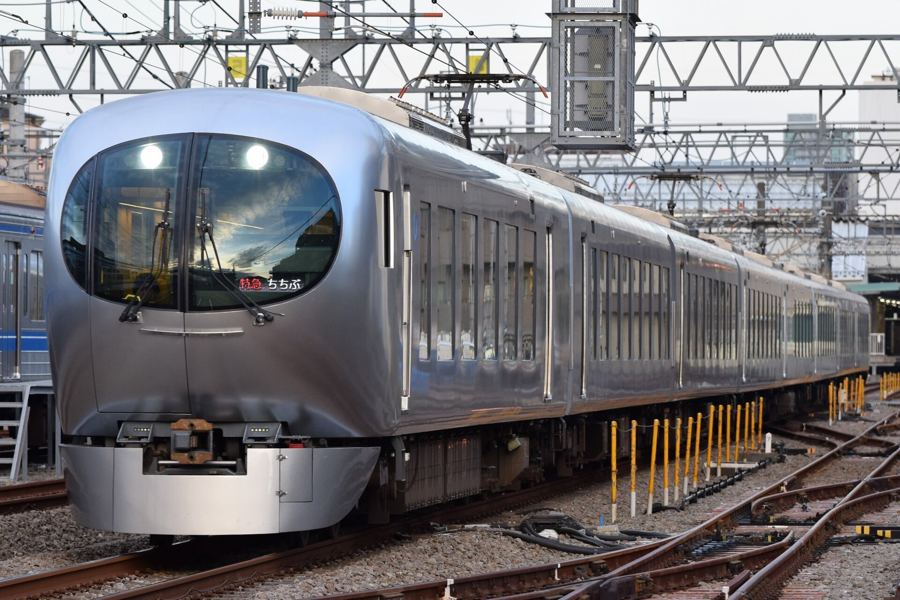
Trains inside Tokyo run until around midnight, which gives a false sense of security. Out in the countryside, the timetable is thinner. The last limited express back to the city can leave in the early evening, and the last bus down from a mountain or a lake can be in the late afternoon, earlier still in winter. Cable cars and ropeways stop before dark.
- Check the return at the start. When you arrive, look up the last bus or lift back to the station, and the last train you want to catch from there.
- Reserve the return seat early. On busy weekends the late-afternoon limited expresses back to Tokyo fill first.
- Know the slow option. If you miss the limited express, ordinary trains on the same line often still run, and they get you home, just more slowly.
The details of seat tickets and passes are in which ticket for a day out.
The suitcase question
The worst way to spend a day out is wheeling a suitcase over cobbles and up shrine steps. Japan has good answers to this, and they are worth using.
Luggage forwarding
Japan has a well-developed door-to-door delivery service for bags. You hand over a suitcase at a hotel front desk, a convenience store or a counter at a major station, fill in a form with the address, and it arrives at your next hotel or inn, usually the next day. It is the standard way to move between two nights away without carrying anything. A few general points: send it at least a day ahead, check that your next accommodation will accept the delivery, and keep anything you need tonight in your day bag. Airports also have counters for sending bags to or from your hotel.
Coin lockers and luggage counters
Most major stations and many tourist stations have coin lockers in several sizes. The largest lockers, the ones that take a full-size suitcase, are few, and at popular stations they fill by mid-morning. Many lockers now take IC cards as well as coins. Some stations also have staffed luggage counters, and in a few places, such as Hakone-Yumoto, there are services that carry bags on to your inn. If you are passing through a busy station on a weekend, arriving early is the best way to find a free locker.
Bullet trains and big bags
On some Shinkansen lines, very large bags need a seat booked with an oversized luggage space, and bringing one on board without that booking can mean a fee. Limited expresses have luggage racks at the ends of the cars, which also fill on busy days. A medium bag that fits overhead avoids all of this.
What goes in the day bag
Keep it light: a backpack you can wear for six hours without noticing.
- A bottle of water and a snack, for places where shops are few.
- A light rain shell or a small umbrella, and a warm layer for the mountains, where it is often several degrees colder than in the city.
- Some cash. Rural buses, temples, shrines and small shops do not all take cards.
- A small towel, for shrine water basins, onsen and sweat.
- A charged IC card and a phone with power for the day.
- A small bag for your own rubbish. Public bins are rare, and you are expected to take rubbish home.
Changing shoes for the trail
Some of these trips mix towns and trails: the shrine and the summit at Mount Tsukuba, the temples and the ridge at Takao, the lakeshore and the marsh boardwalk above Nikko. City shoes are fine for streets and shrine paths but slippery on wet roots, stone steps and rock. If you will be walking on mountain trails, wear or carry shoes with real grip.
If you are carrying them, a light bag for the dirty pair helps; trail mud does not belong on train seats. Many trailheads have toilets where you can change, and some stations have changing spaces or at least a bench. If you are going on to a nice dinner or an inn, swap back before you get on the train.
A simple checklist
- Train before eight, seat reserved if it is a limited express.
- Big bags forwarded or locked before you set off.
- Last bus and last train checked on arrival.
- Shoes for the ground you will walk on.
- Cash, water and a layer in the bag.