Hot springs · Hakone
The Hakone loop, done in the right direction
Mountain railway, cable car, ropeway over a steaming valley, a boat across a crater lake and a walk under old cedars. Do it in this order and the queues stay behind you.
Hakone is not one place but a circuit. Inside an old volcanic caldera, a chain of different vehicles carries you from a hot-spring town in a river gorge up to a steaming crater, down to a lake and back along a road walked by travellers for four hundred years. Each link is easy. The skill is in the order, because the ropeway and the boats have queues that build through the day, and nearly everyone follows the same direction.
This guide runs the loop anticlockwise: train first, lake last. That puts the most weather-sensitive part of the day, the ropeway, in the morning, when the air is often clearer and the lines are shorter.
Leaving Shinjuku, changing at Hakone-Yumoto
The Odakyu Romancecar, a limited express with reserved seats, runs from Shinjuku to Hakone-Yumoto in about 85 minutes. The alternative is the Shinkansen from Tokyo station to Odawara in a little over half an hour, then a short ride up the valley. Odawara is worth a stop in its own right; see Odawara's rebuilt castle keep if you have time on the way back.
Hakone-Yumoto is the oldest of Hakone's hot-spring towns, packed into the gorge where two rivers meet. If you are staying the night, this is the moment to lighten your load: the station has a service that carries bags on to many inns in the area, and luggage forwarding from Tokyo is another option. Both are covered in general terms in first trains, last trains and the suitcase question. Climbing in and out of a cable car with a suitcase is no fun.
On passes: the railway group that runs the Romancecar also sells an area pass covering most of the loop's trains, buses, lifts and boats. Whether it pays depends on how much of the loop you do; which ticket for a day out explains how to judge it. Check the current terms before you buy.
The switchback railway to Gora
The Hakone Tozan Railway climbs from Hakone-Yumoto to Gora, and it is one of the steepest adhesion railways in Japan. The line opened to Gora in 1919. On the way up, the train stops three times at switchbacks, where the driver and conductor change ends and the train reverses up the next slope. Sit near a window on either side; the line crosses a high bridge over the gorge, and in June and July the tracks are lined with hydrangeas.
Chokoku-no-Mori, the stop before Gora, serves the Hakone Open-Air Museum, a large hillside sculpture park. It is easily half a day on its own, so pick it or the full loop, not both, unless you are staying two nights.
Up the cable car and over Owakudani
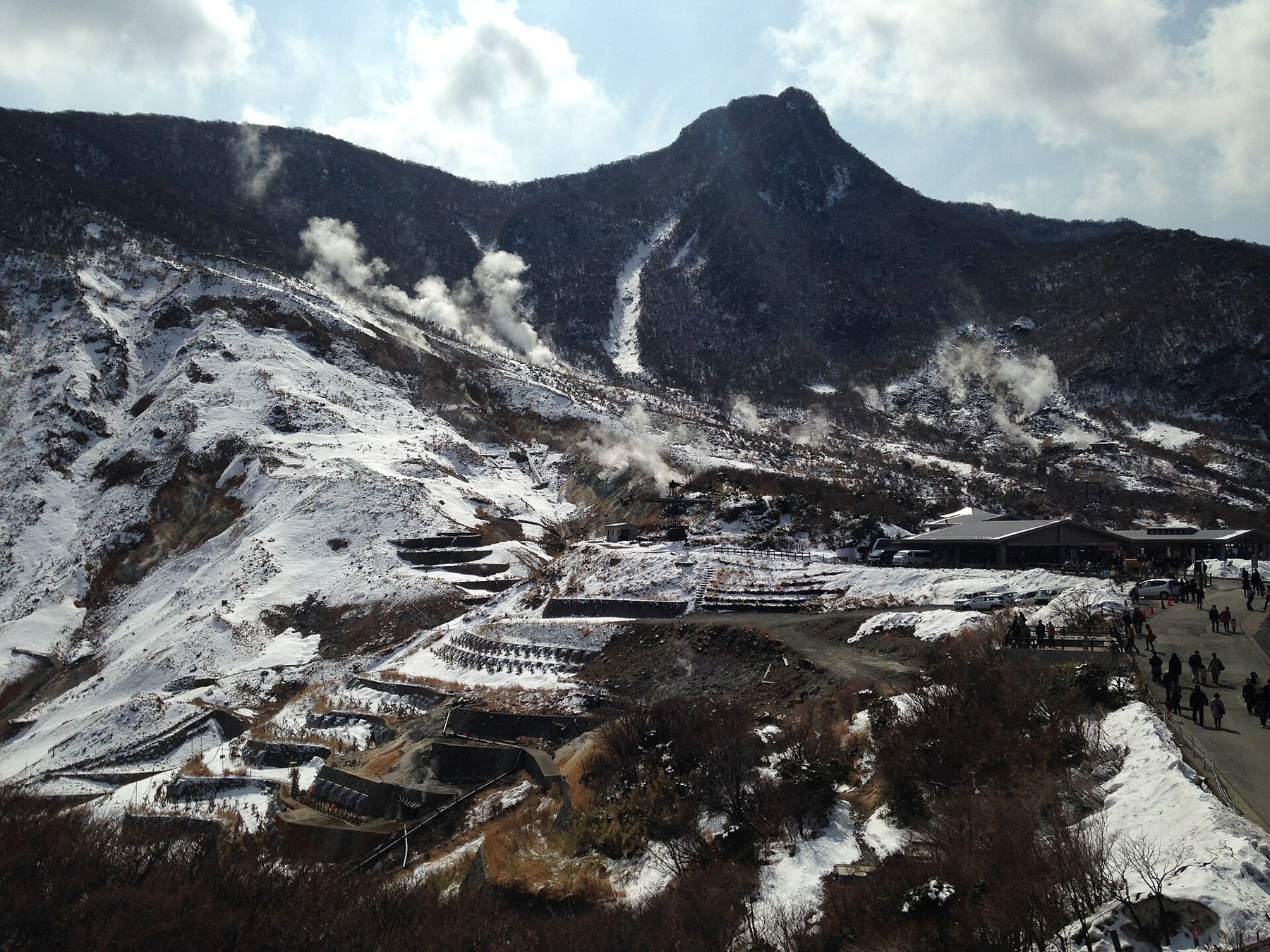
At Gora, change to the cable car, which grinds up the hillside to Sounzan in about ten minutes. At Sounzan, the Hakone Ropeway begins. Its gondolas cross a ridge and then, quite suddenly, swing out over Owakudani, a raw valley of yellow and grey rock where volcanic gas vents from the ground. The smell of sulphur reaches you through the cabin. On a clear day Fuji fills the view ahead.
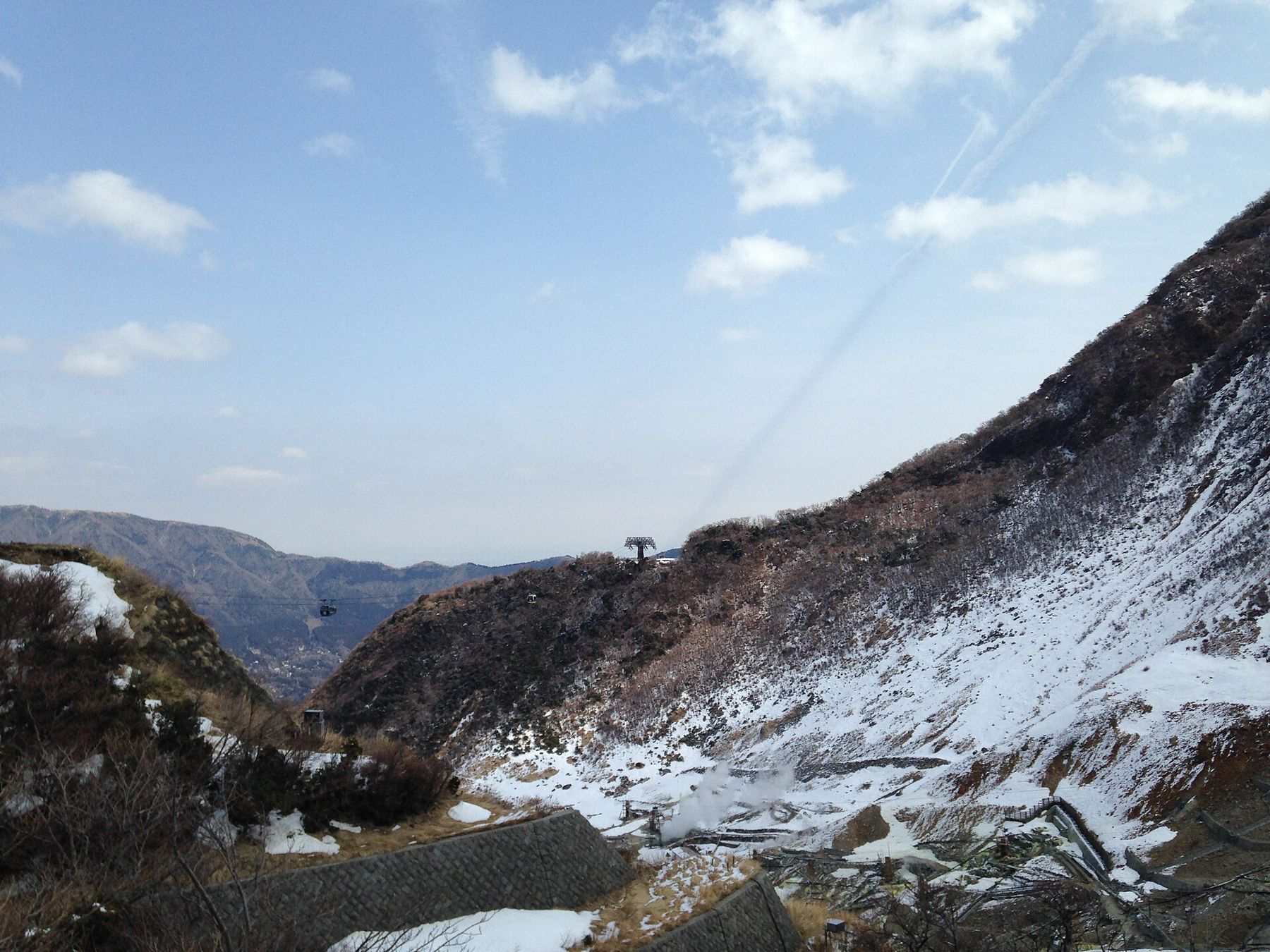
Owakudani was formed by an eruption of Mount Kamiyama around three thousand years ago, and the area is still active. The well-known snack here is kuro-tamago, eggs boiled in the hot spring until their shells turn black from iron and sulphur in the water. Tradition says each one adds years to your life.
Read this part twice: Owakudani is an active volcanic area, and access closes when activity rises. The volcanic alert level for Hakone has been raised more than once since 2015, and each time the ropeway stopped and the valley closed to visitors, at times for months. The ropeway also stops in strong wind and when gas levels near the line are high, sometimes for just an hour or two. When it is not running, replacement buses have usually linked the stations, but the loop becomes a different day. Check the volcanic alert level and the ropeway's operating status on the morning you travel, and have a plan for reaching the lake by bus if either is closed.
The skill is in the order, because the ropeway and the boats have queues that build through the day, and nearly everyone follows the same direction.
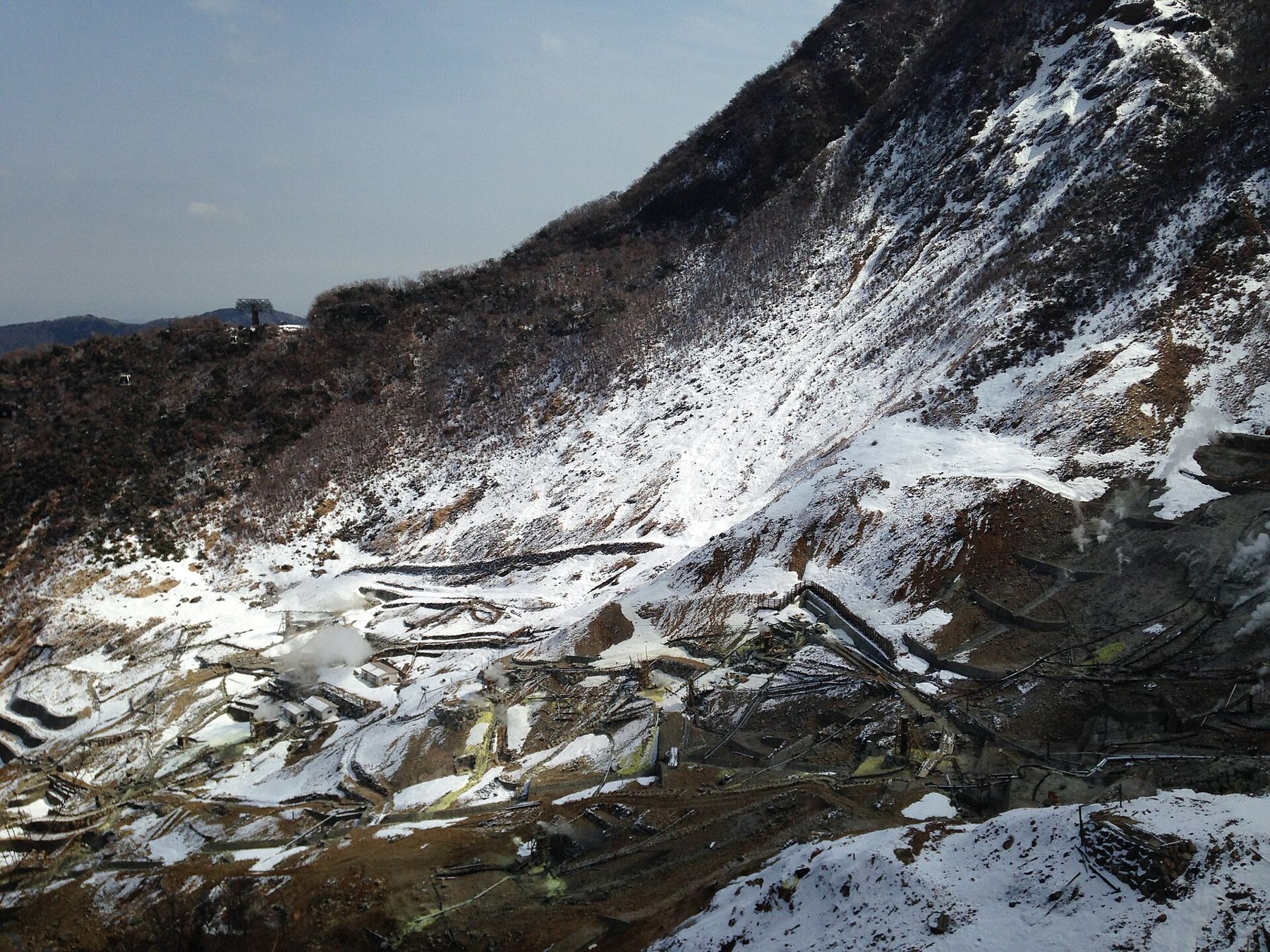
From Owakudani the ropeway continues down past Ubako to Togendai on the northern shore of Lake Ashi.
Across Lake Ashi to the shrine in the water
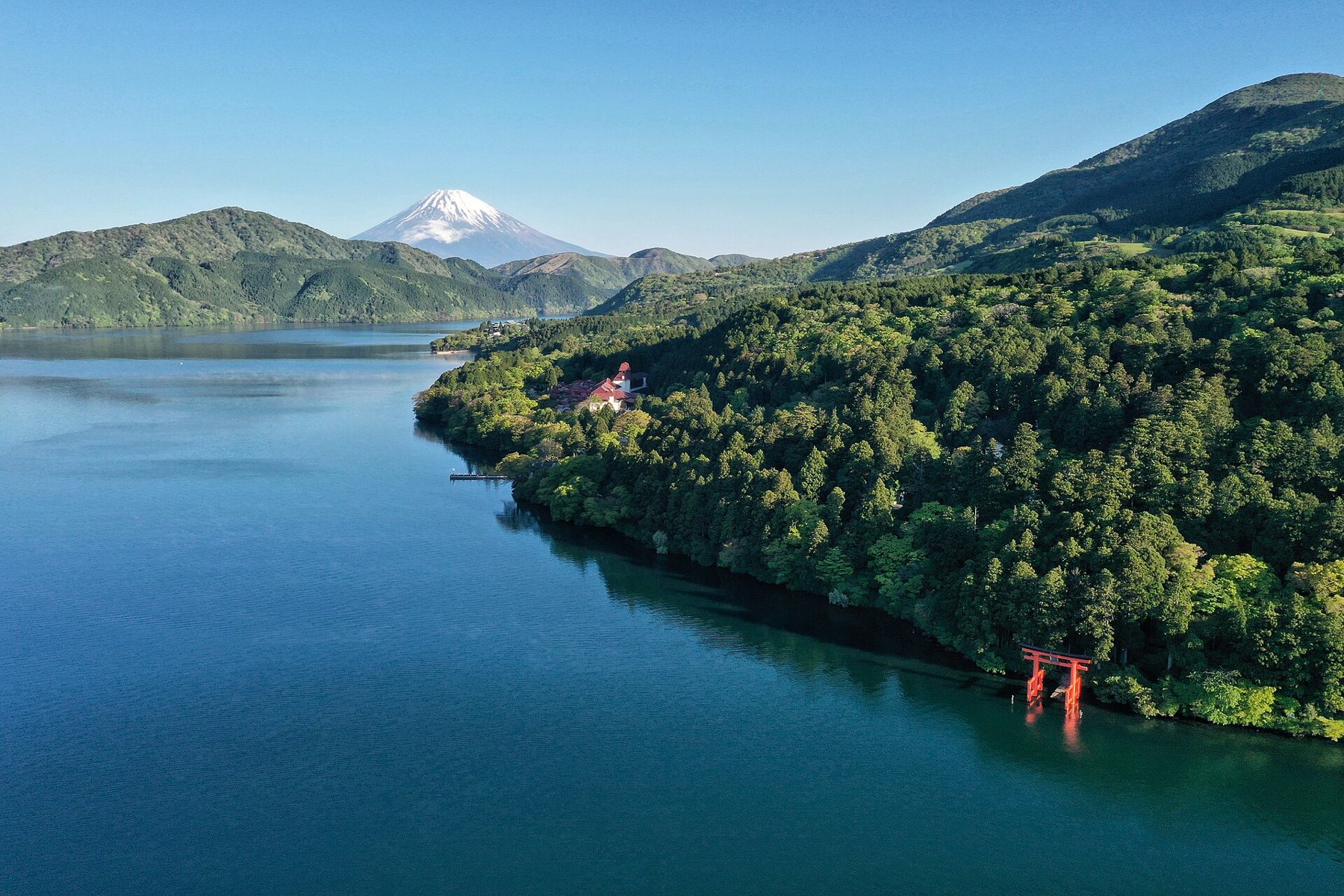
Lake Ashi, Ashinoko in Japanese, fills part of the old caldera. Sightseeing boats, some of them dressed up as galleons, cross from Togendai to Hakone-machi and Moto-Hakone at the southern end in about half an hour. The view back over the stern is the best of the day when Fuji is out: the mountain's cone above the far ridge, the green hills reflected in the water. Stand outside if the deck is open.
Get off at Moto-Hakone for Hakone Shrine. Its red torii, the gate marking the shrine's ground, stands in the shallows of the lake, and this is the single most photographed scene in Hakone, so a line of people often waits to stand beneath it for a picture. The shrine itself sits up a long flight of stone steps through tall cedars, and is far quieter than the shoreline. At the hall, a coin, two bows, two claps and one more bow is the usual pattern.
The old Tokaido and the cedar avenue
In the Edo period, the Tokaido highway linked Edo with Kyoto, and it crossed these mountains between Odawara and Mishima. Hakone was its hardest climb, and the shogunate placed a checkpoint by the lake to inspect travellers. The Hakone Checkpoint you can visit today at Hakone-machi is a careful reconstruction on its original site, built from old plans, with a small museum.
Between Moto-Hakone and the checkpoint, a stretch of the old road runs under an avenue of huge cedar trees planted in the early Edo period to shade travellers. It is a short, flat walk and the shade is welcome in summer. If you want more, sections of the original stone-paved Tokaido climb out of Moto-Hakone towards Hatajuku. The stones are uneven and slick in the rain, and it is more of a hike than a stroll, but it gives a real sense of what the road asked of people on foot.
Coming down, and staying the night
Buses run from Moto-Hakone and Hakone-machi back down to Hakone-Yumoto and Odawara, winding through the hills in under an hour if the roads are clear. On holiday weekends the late-afternoon traffic can be heavy, which is one more reason to start early.
The loop can be done as a long day trip, but Hakone is a hot-spring area first, and a night lets you finish the circuit in a bath rather than a queue. Onsen manners are simple and strictly kept: wash and rinse thoroughly at the seated showers before you get in, keep your small towel out of the water, tie up long hair, and do not swim or splash. Rules on tattoos vary from place to place, so check in advance. Many inns serve dinner at a set time, so plan the afternoon around it.
If you have a second day, use it for the parts the loop rushes: the Open-Air Museum, the gardens at Gora, or a slower walk on the old road. And if cloud hid Fuji, the mountain may be out at dawn. For a closer look, the lakes on its northern side are covered in Lake Kawaguchi and the Fuji Five Lakes.
Also on the the middle ring
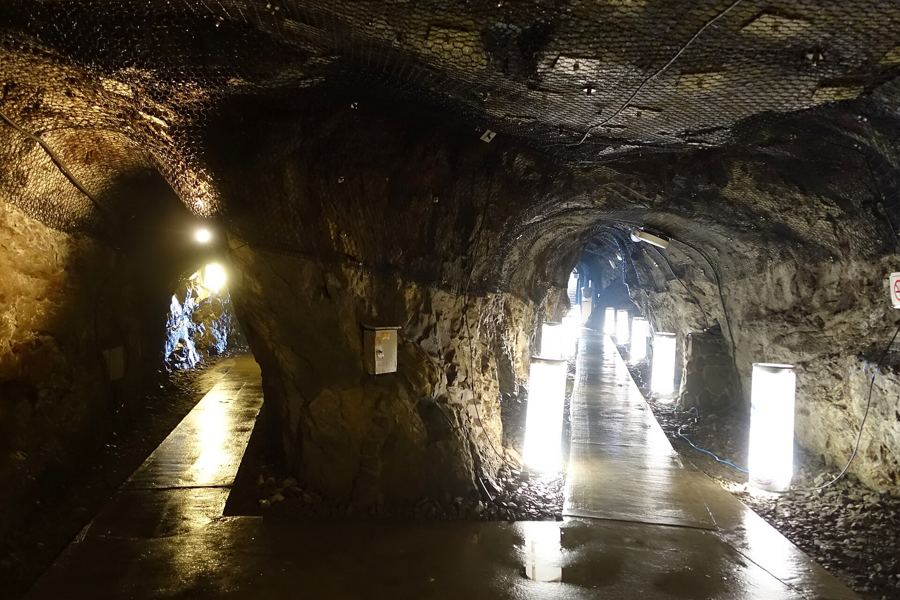
Enoshima island: caves, a lighthouse and the long bridge back
70 min · Shrines & temples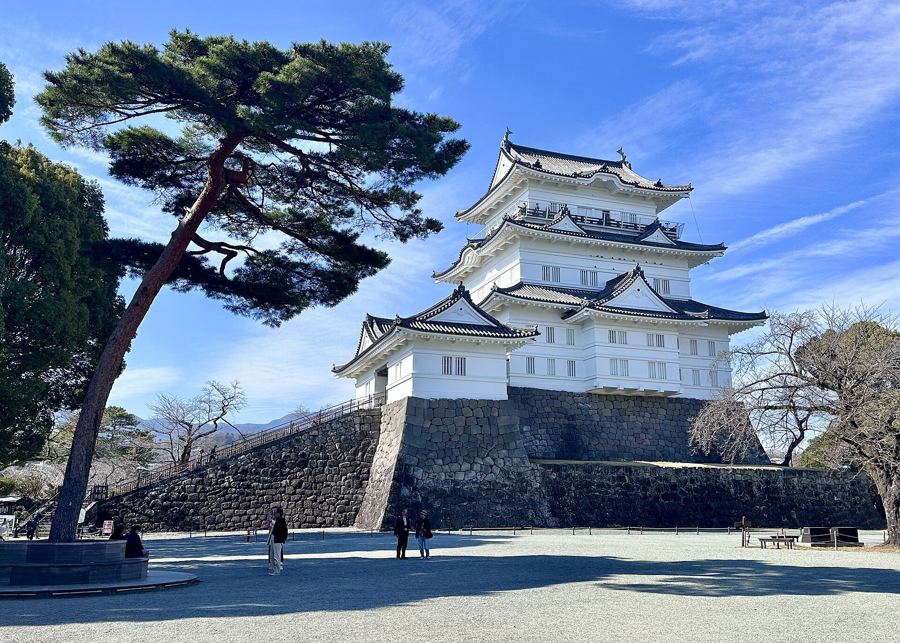
Odawara: a rebuilt castle keep and the plum groves below it
75 min · Old towns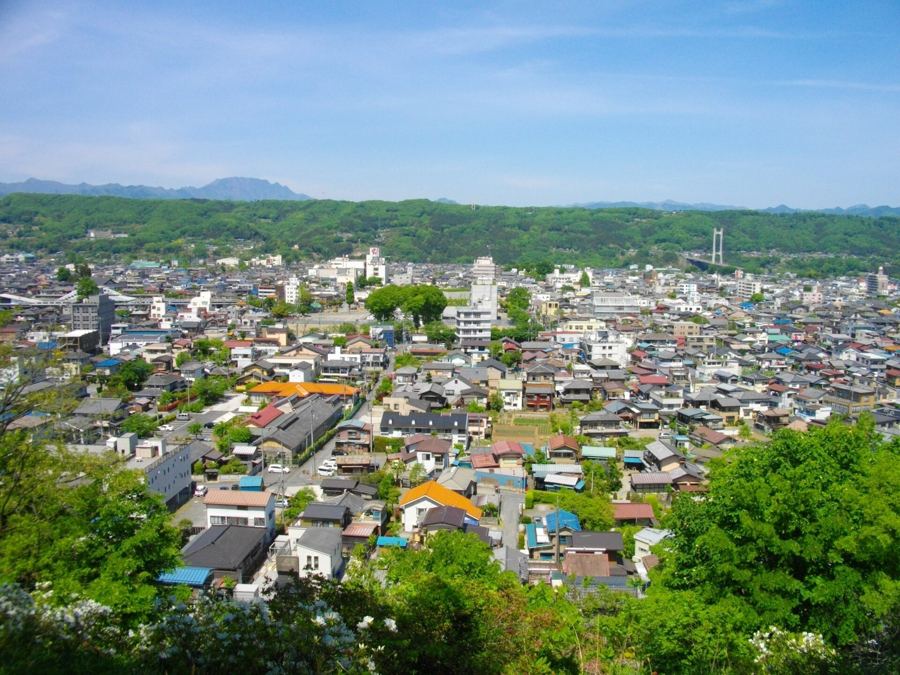
Chichibu: a valley town with a shrine and a sea of moss phlox
80 min · Old towns