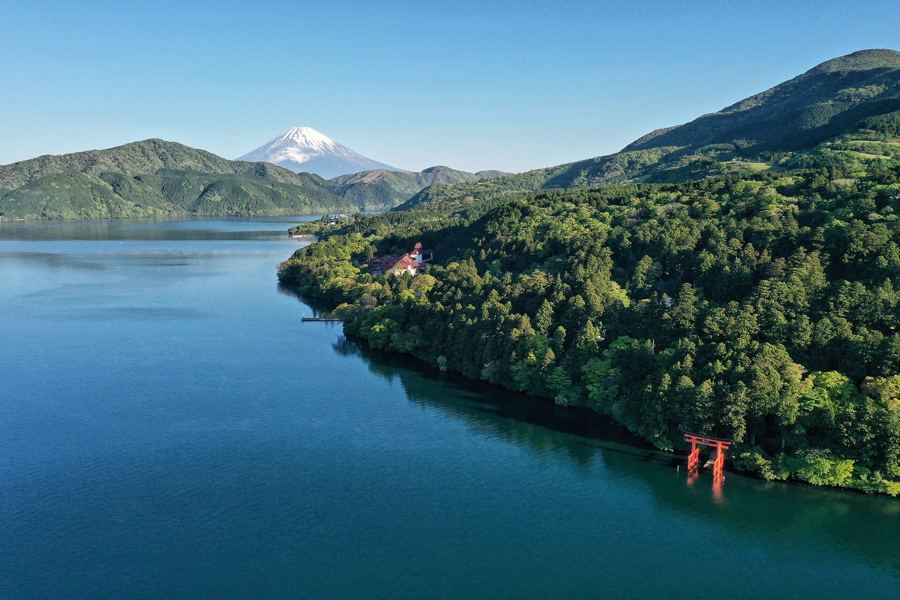
Old towns · Chichibu
Chichibu: a valley town with a shrine and a sea of moss phlox
A mountain basin at the end of the Seibu line, with a carved shrine, a hillside that turns pink in spring and a river that has cut itself a bed of stone terraces.
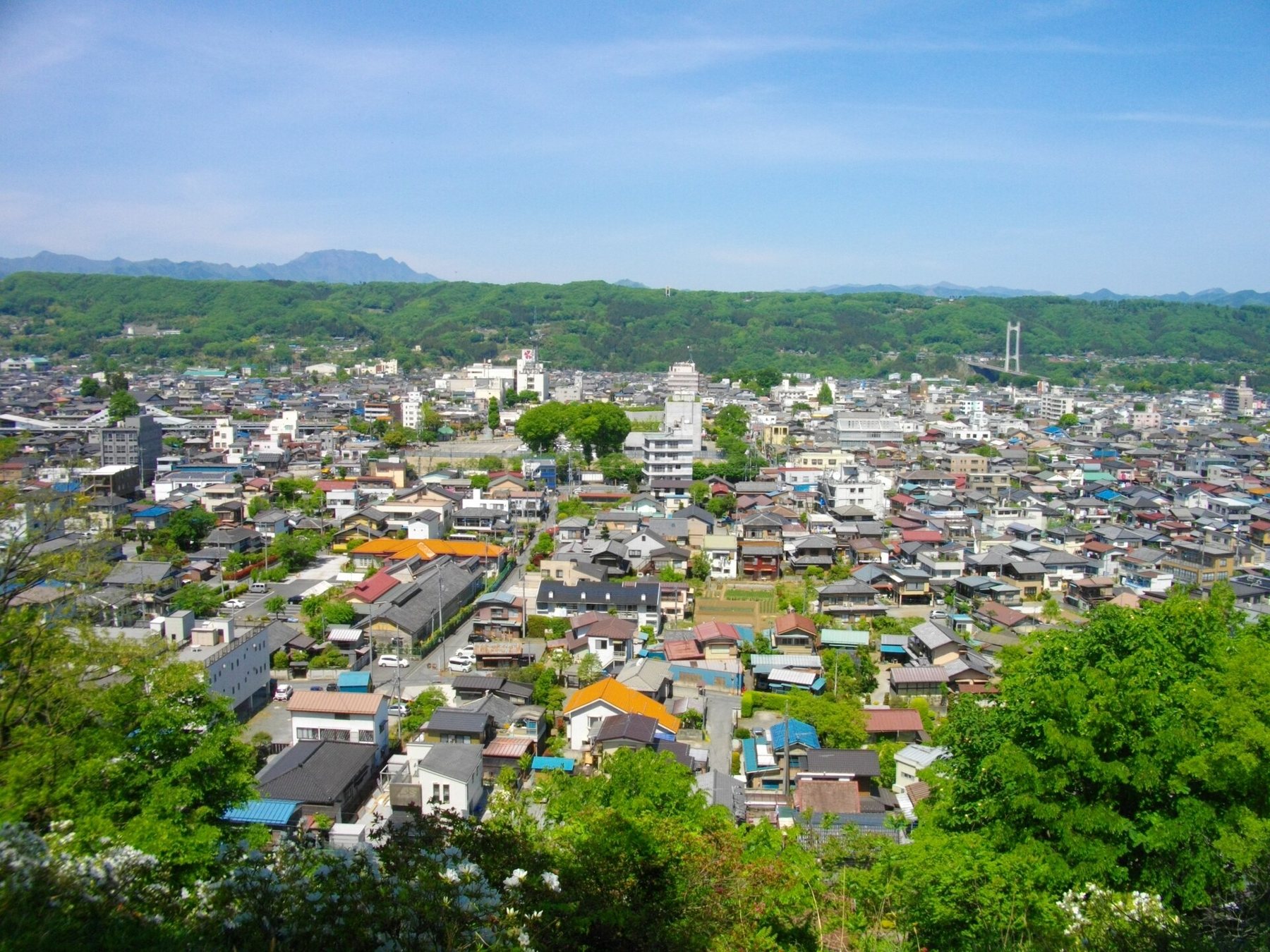
The train climbs out of the Kanto plain through a long tunnel, and when it comes out the view has changed: steep wooded hills on every side, a broad river, and above the town a grey mountain with its face cut into steps. That mountain is Bukosan, quarried for limestone for a century, and it is the first thing you notice in Chichibu and the last thing you see as you leave.
Chichibu sits in the far west of Saitama Prefecture, in the 90-minute ring. It is a working town rather than a resort, and that is part of its appeal.
The quickest way into the valley
Most people take the Seibu Ikebukuro line from Ikebukuro, changing to or riding straight through on the Seibu Chichibu line. The limited express, which has reserved seats, reaches Seibu-Chichibu station in about 80 minutes; local trains take noticeably longer with a change at Hanno. Next to Seibu-Chichibu is Ohanabatake station on the separate Chichibu Railway, which runs down the valley to Nagatoro and also links with the main town station, Chichibu. Some regional passes bundle these lines together, and the guide to which ticket for a day out explains in general terms when that helps. Check what is on offer before you travel.
A hillside in pink: Hitsujiyama Park
Hitsujiyama Park, a short walk uphill from Seibu-Chichibu or Yokoze station, is a wooded hill park with a view over the whole basin. For most of the year it is quiet. From mid April into early May its slopes fill with shibazakura, moss phlox, a low creeping plant that flowers so densely that the leaves disappear. Several hundred thousand plants are laid out in bands of pink, magenta, white and pale lilac, and the effect from the top of the slope is of a striped carpet thrown down below the mountain.
During the flowering season the park charges for entry to the shibazakura hill, and on weekends the paths are full by mid morning. If you can, go on a weekday and arrive when the gates open. Bloom timing shifts by a week or two from year to year with the spring weather, so check reports before you commit.
Chichibu Shrine and its carved animals
Chichibu Shrine stands near the centre of town, ten minutes' walk from Seibu-Chichibu. It is one of the oldest shrines in the Kanto region, and its present main hall was built in the late 16th century by order of Tokugawa Ieyasu. Walk slowly around the outside of the hall. Its carvings are the reason to come.
- The chained dragon, bound so that, a local legend says, it would stop slipping away at night.
- A tigress with her cub on the front, an image of protecting children.
- The northern owl, its head turned to watch over the shrine.
- Three monkeys, cheerfully doing the opposite of their famous cousins: they listen, look and speak.
Those last monkeys make an interesting pair with the ones at Nikko, which are covered in reading the carvings at Tosho-gu.
Nagatoro's rocks and river
Ride the Chichibu Railway down the valley for about twenty minutes to Nagatoro. A few minutes from the station the Arakawa river runs over Iwadatami, a broad shelf of layered rock smoothed into terraces, flat enough to walk on and to sit beside the water. The rock is crystalline schist, pushed up from deep underground, and the area is known for its geology; it forms part of a designated national natural monument.
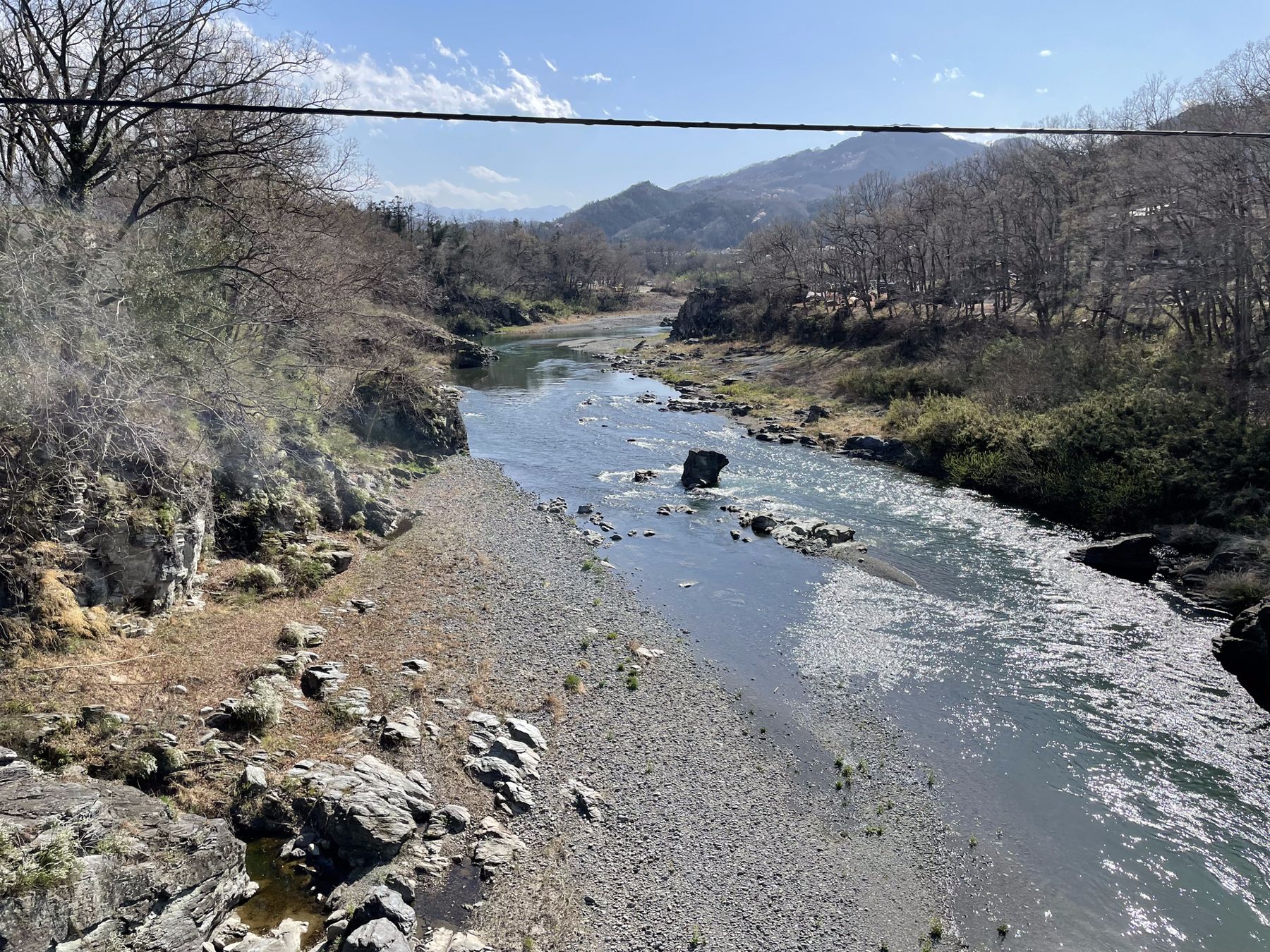
In warmer months flat boats take people down a stretch of the river, and the banks fill with families. In autumn the maples along the gorge turn, and it is one of the better leaf walks within easy reach of Tokyo. Keep off the water's edge after heavy rain: the river rises fast.
The night festival in December
The Chichibu Night Festival, held each year on 2 and 3 December, is the town's great event. Huge wooden floats, lit with lanterns and decorated with carving and embroidery, are hauled through the streets and up a steep slope to a gathering ground in the town, while fireworks go up over the cold valley. It is part of the group of float festivals that UNESCO lists as intangible cultural heritage. It draws very large crowds, and trains home are crushed; if you go, a night in the valley is far easier than the last train.
How the Chichibu day runs
In flower season, put Hitsujiyama Park first, then the shrine, then Nagatoro in the afternoon. In other seasons you can reverse it and finish with a walk through town. Old-style buildings around the shrine show how prosperous the silk trade once made Chichibu, and the town is also the base for a pilgrimage of 34 Kannon temples scattered across the basin, a good excuse to come back.
The basin has its own weather. Mornings can be misty and noticeably cooler than Tokyo, while summer afternoons are hot and still between the hills, so dress in layers. Allow more time than the map suggests: the walks between the stations, the park and the shrine are short, but the trains down the valley to Nagatoro are not frequent, and missing one costs a while. Plan the return journey before you set off for the river.
Chichibu pairs naturally with Kawagoe as an introduction to the towns of Saitama, though not in a single day. One is a compact merchant street; the other is a whole valley.
Also on the the middle ring
Enoshima island: caves, a lighthouse and the long bridge back
70 min · Shrines & temples
Odawara: a rebuilt castle keep and the plum groves below it
75 min · Old towns
Mount Tsukuba's twin peaks by cable car, down on foot
80 min · Peaks within reach