Peaks within reach · Hachioji
Mount Takao by trail 6, down by the ridge
Fifty minutes from Shinjuku, a 599-metre mountain with a stream trail up, a temple of long-nosed mountain spirits, a view to Fuji and a ridge path home. Skip the cable car, or keep it for later.
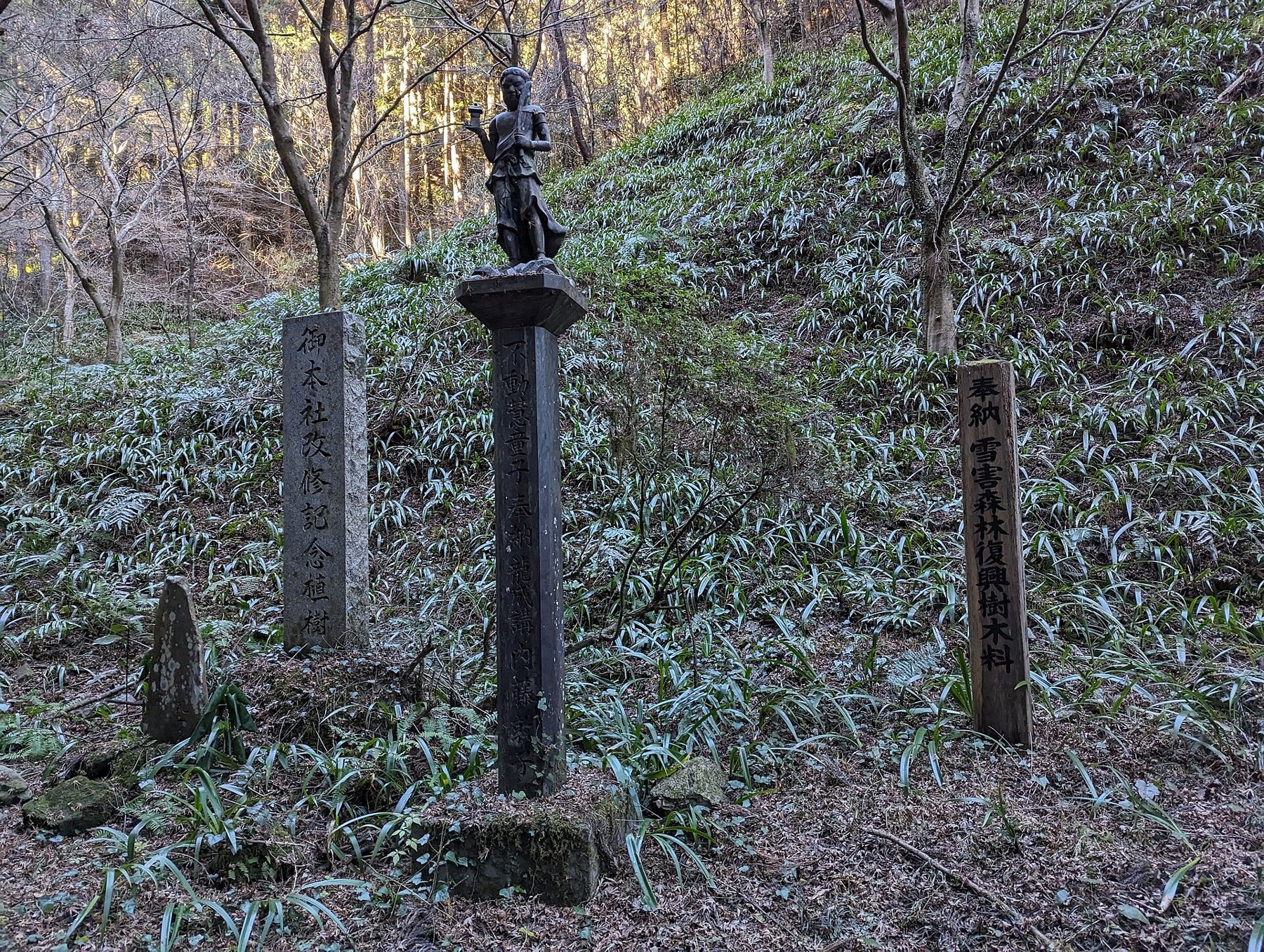
Mount Takao is the hill Tokyo climbs. On a fine Sunday in November the main path can feel like a station concourse. Yet it remains a real mountain, 599 metres of forest with more plant and insect species than you would expect so close to a city, and with the right trail and an early start you can walk most of the way up hearing more water than voices.
This route goes up trail 6, the stream path, and comes down by the Inariyama ridge, with the summit and the temple of Yakuo-in in between. It takes most hikers four to five hours with stops. Nothing on it is technical, but it is a proper walk, so wear shoes with grip.
Fifty minutes on the Keio line
The Keio line runs from Shinjuku to Takaosanguchi, the station at the foot of the mountain, in about 50 minutes on the faster services; some need a change at Kitano. JR Chuo line trains reach Takao station, where you can change to the Keio line for the last stop. If you are weighing up tickets, which ticket for a day out covers the general choices.
Go early. The advice in first trains, last trains and the suitcase question matters more here than almost anywhere, because the mountain fills from the bottom up. A train that reaches Takaosanguchi before nine puts you on the trail ahead of most people.
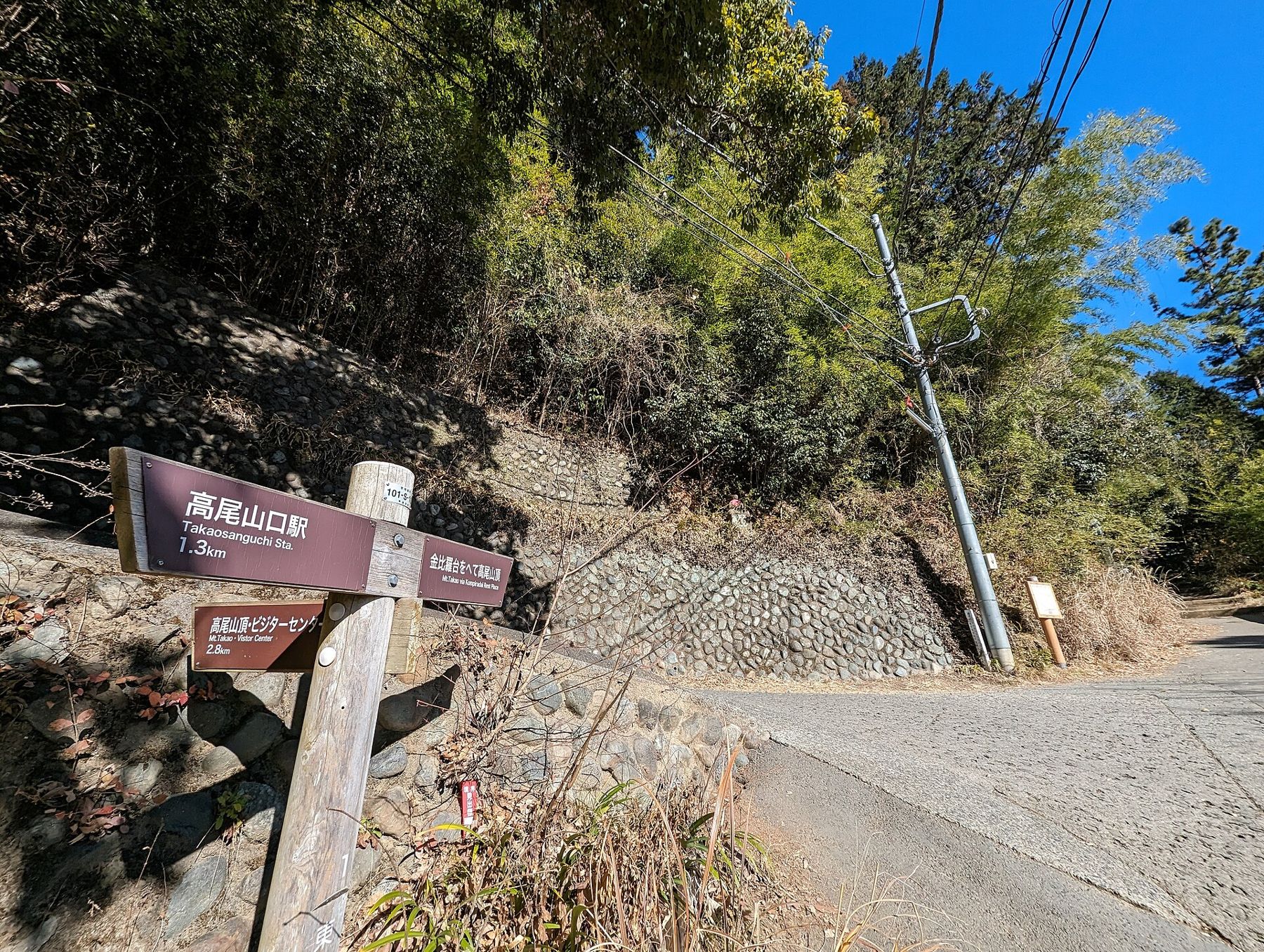
From the station, walk a few minutes along the road past the souvenir shops to the plaza by Kiyotaki, the bottom station of the cable car. Trail 1, the broad paved path, starts here. Trail 6 begins a little further along the road to the left.
Trail 6: up the stream
Trail 6 follows a valley up the shady north side of the mountain. It starts on a quiet lane, passes a small waterfall where ascetics have stood under the falling water as a form of training, and then becomes a forest path beside a clear stream under cedar, fir and broad-leaved trees. In the upper part the path runs in the bed of the stream itself for a stretch, stepping from stone to stone. In summer it is the coolest way up; after rain it is wet and slippery, and after heavy rain it is best avoided.
Allow about an hour and a half. On crowded days the trail has sometimes been managed as one-way, uphill only, which is another reason to climb rather than descend it. Signposts are clear and numbered, so you will not need a map to stay on it, but it is still worth carrying one.
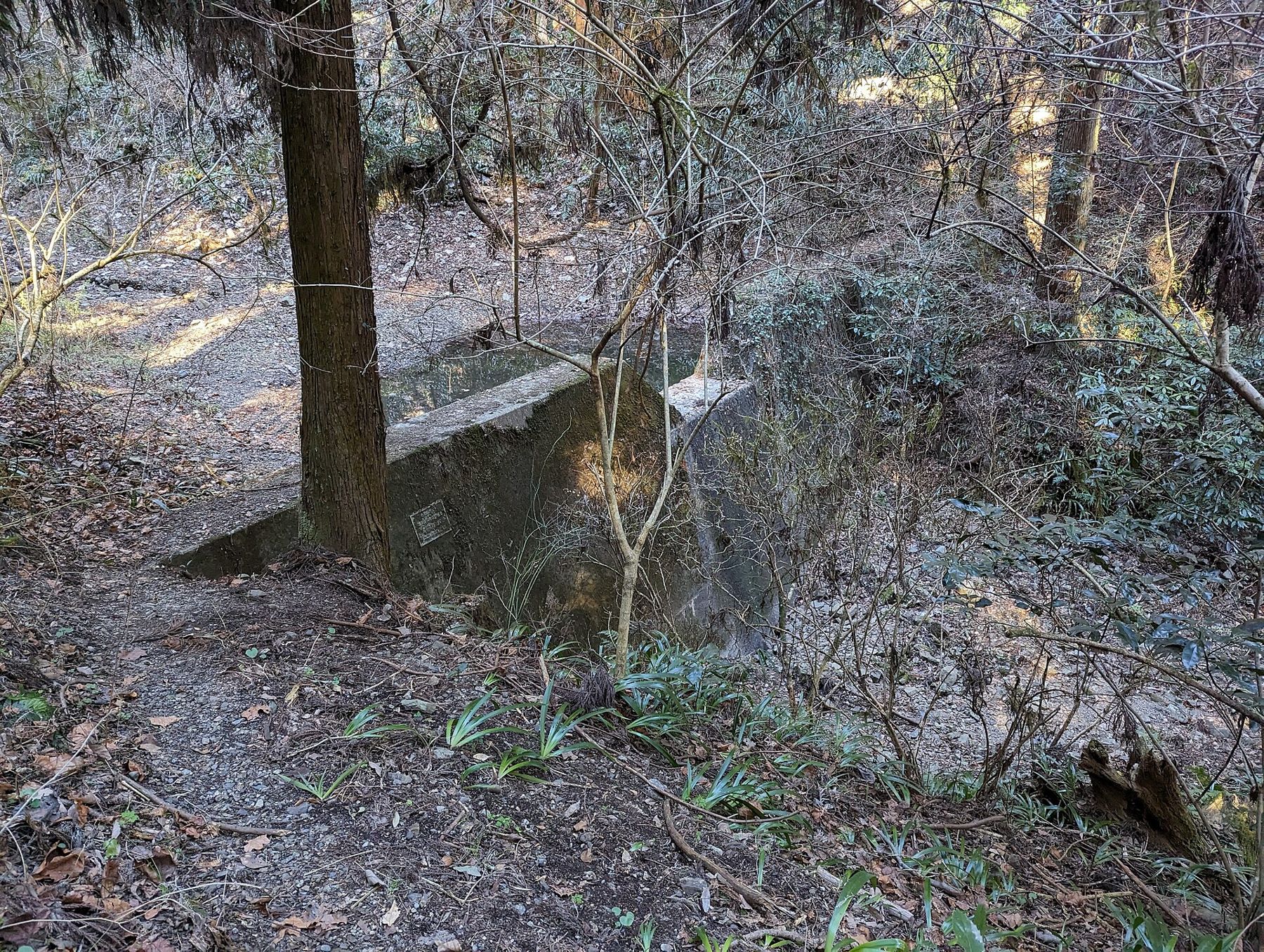
Near the top, wooden steps climb out of the valley and join the main paths just below the summit.
The summit and the view west
The summit is a broad, open plateau with benches, a visitor centre and toilets. It is never lonely. Walk to its western edge, though, and the reason people come is in front of you. Ridge after ridge of the Tanzawa and Okutama mountains, and on a clear day the cone of Fuji rising above them all.
Walk to its western edge, though, and the reason people come is in front of you.
Clear days are commonest from late autumn to February, when the air is dry and cold. Around the winter solstice the sun sets almost directly behind Fuji's summit as seen from here, an event called Diamond Fuji, which draws a crowd of photographers in the late afternoon. In summer the haze usually hides the mountain altogether. Check the forecast the evening before, and if the sky is clear in winter, go.
Yakuo-in and the tengu
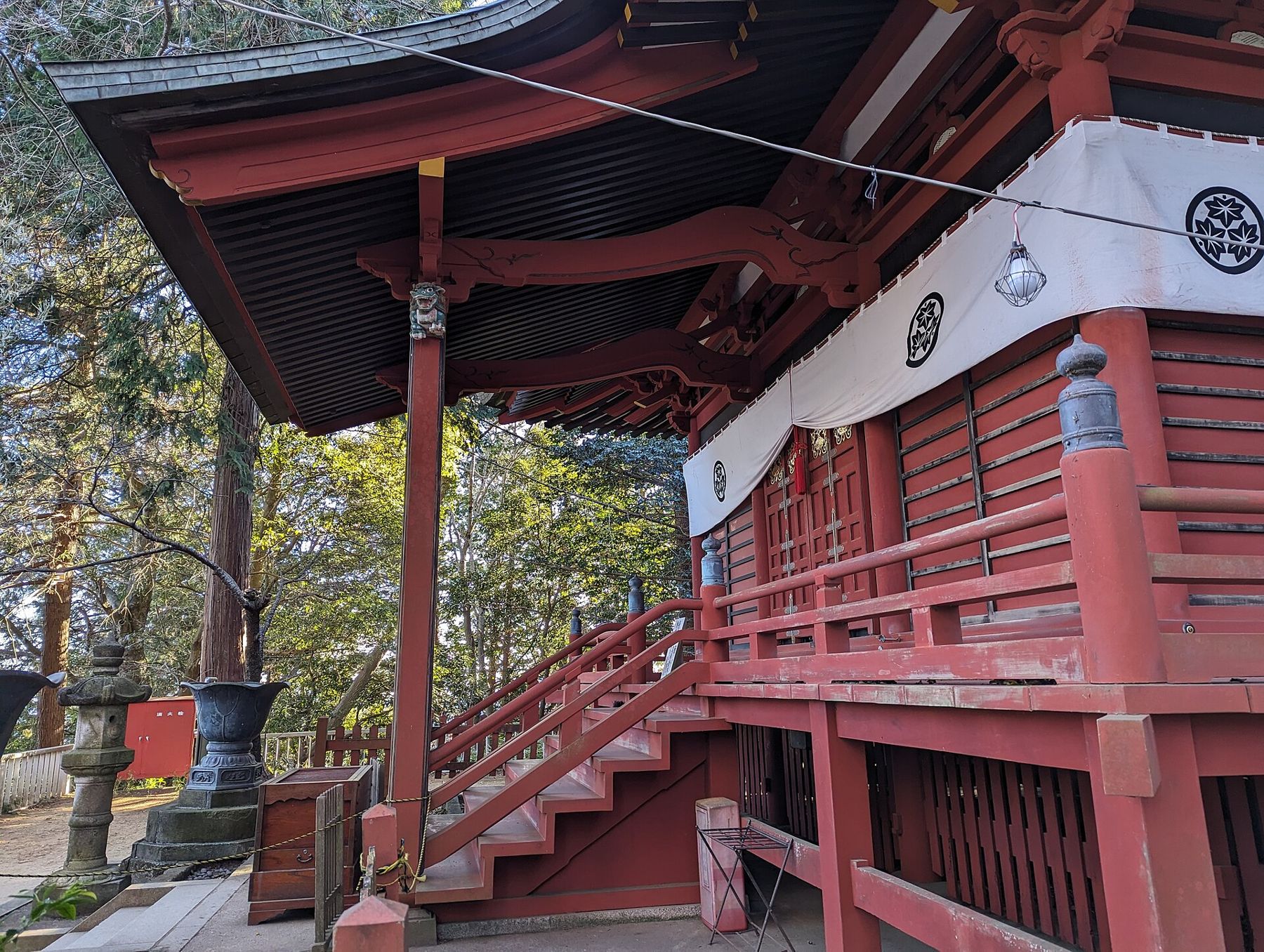
Below the summit on the trail 1 side stands Yakuo-in, a Buddhist temple of the Shingon school, said to have been founded in the 8th century. It is a temple of mountain worship, and its guardians are tengu: mountain spirits shown either with long red noses or with the beaks and wings of crows. Statues of both stand at the temple, and you will see tengu faces on everything from the incense burners to the charms on sale.
The main hall is lacquered and gilded, carved with dragons and flowers, and stands at the top of a steep flight of steps. As at any temple, take off your hat inside the halls, keep your voice low near people praying, and put a coin in the offering box before you pray, bowing once at the end rather than clapping, as you would at a shrine. The temple also offers goshuin, the handwritten red-stamped seals that pilgrims collect in small books.
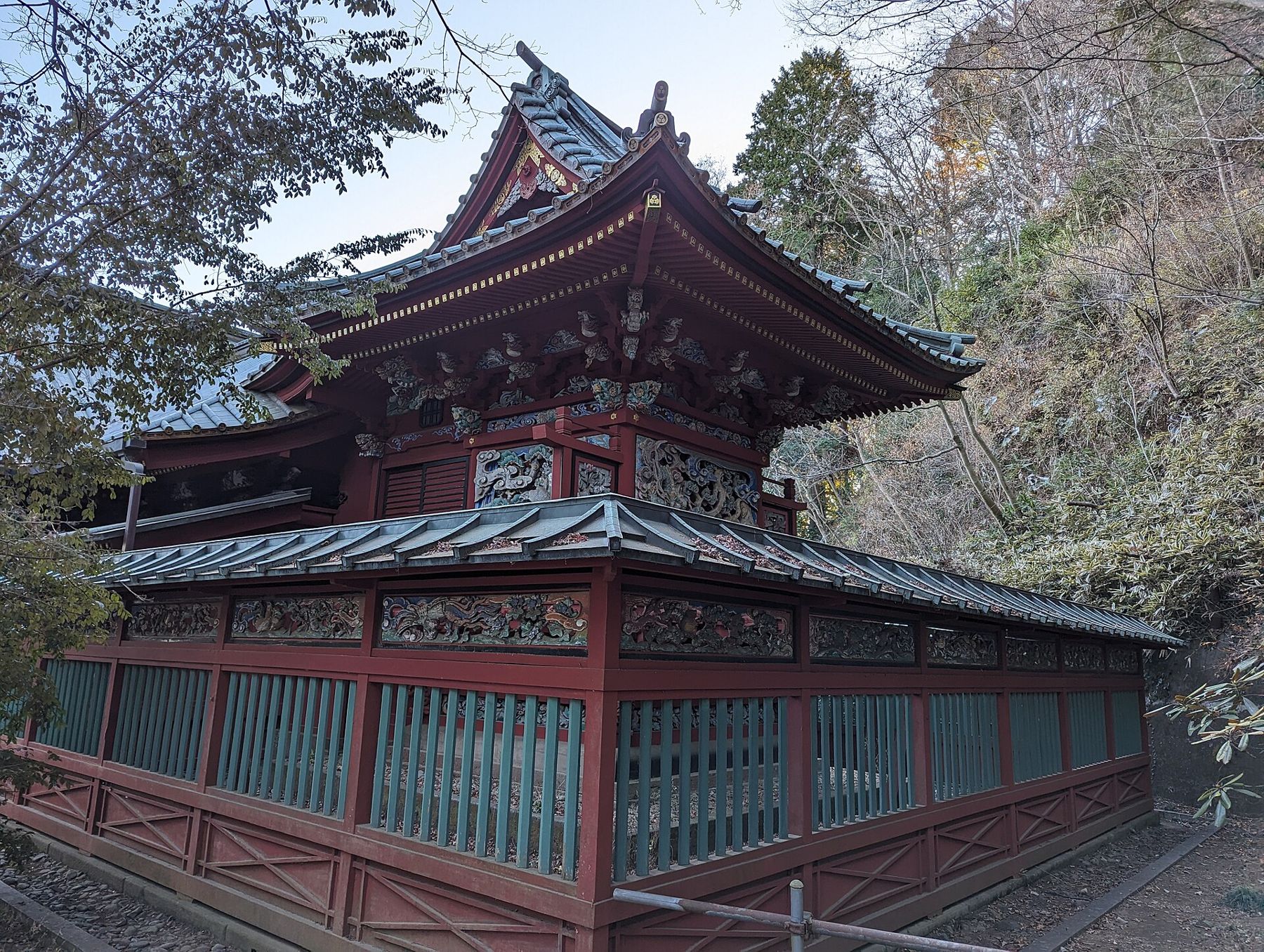
Between the temple and the cable car top station you pass the "octopus cedar", an old tree whose roots twist out of the ground like tentacles, and stretches of path lined with lanterns. This part of the mountain is busy, but the temple buildings are worth it.
Down the Inariyama ridge
From the summit, the Inariyama trail runs down a long ridge on the south side of the mountain, back to the foot near Kiyotaki. It is sunnier and more open than trail 6, with long flights of wooden and earth steps, root-crossed paths and a shelter partway down with a view out over the western suburbs of Tokyo towards the city. Near the bottom it passes a small Inari shrine, from which the trail takes its name. Allow about an hour and a quarter going down. Your knees will notice the steps.
If your legs are finished, the cable car or the open chairlift beside it will take you down from near Yakuo-in to Kiyotaki instead. The cable car climbs one of the steepest gradients of any in Japan, which is something to see even on the way down. Queues on autumn weekends can be long, so leave enough time.
Down from the summit, and after
Back at Takaosanguchi you will find a hot spring bathhouse beside the station, a pleasant way to end a winter hike; as at any onsen, wash thoroughly before you get in, keep your towel out of the water, and note that rules on tattoos vary, so check before you go. The TAKAO 599 MUSEUM, a short walk from the station, explains the plants, insects and animals of the mountain, and it makes a good stop on a wet day.
If Takao leaves you wanting a bigger day, the twin peaks of Mount Tsukuba are the next step up, and the seasonal notes in the weeks that change a day out help you pick a clear winter weekend for either.