Shrines & temples · Kamakura
Kamakura in a day: the Buddha, the bamboo and the sea
An old shogun's capital between wooded hills and the beach, an hour from Tokyo. Here is how to see the bronze Buddha, a bamboo grove and the main shrine without fighting the crowd all day.
Kamakura was the seat of Japan's first shogunate, the military government founded by Minamoto no Yoritomo at the end of the 12th century. The town was chosen for its defences: hills on three sides, the sea on the fourth. Those same hills now hold dozens of temples and shrines, and the sea is a long, gently curving beach. Everything is close, and that is the trouble: on spring and autumn weekends, the whole of Tokyo seems to have had the same idea.
This route goes against the stream. It starts on the east side, where few people begin, and finishes by the sea.
Into town, and east to the bamboo
The JR Yokosuka line runs from Tokyo station to Kamakura in about an hour, and the Shonan-Shinjuku line comes from Shinjuku and Shibuya in a similar time. Some trains stop at Kita-Kamakura first, the station for Engaku-ji and Kencho-ji, two great Zen temples worth a separate morning.
From Kamakura station, take a bus or walk about 30 minutes east to Hokokuji, a small Rinzai Zen temple. Behind its main hall is a grove of thick moso bamboo, a couple of thousand stems rising straight out of a carpet of moss. A short path loops through it, and the light inside is green even at noon. You can pay to sit with a bowl of matcha in a small pavilion looking into the grove. The temple is far less crowded first thing in the morning, which is why it comes first.
Tsurugaoka Hachimangu and the long approach
Walk back west towards Tsurugaoka Hachimangu, the shrine at the heart of the old capital. Yoritomo moved it to this site in 1180, and laid out a broad straight avenue, Wakamiya-oji, from the shrine down to the sea. Part of that avenue is the Dankazura, a raised path lined with cherry trees between stone walls, built in the shogun's time and narrowing slightly as it nears the shrine so that it looks longer than it is.
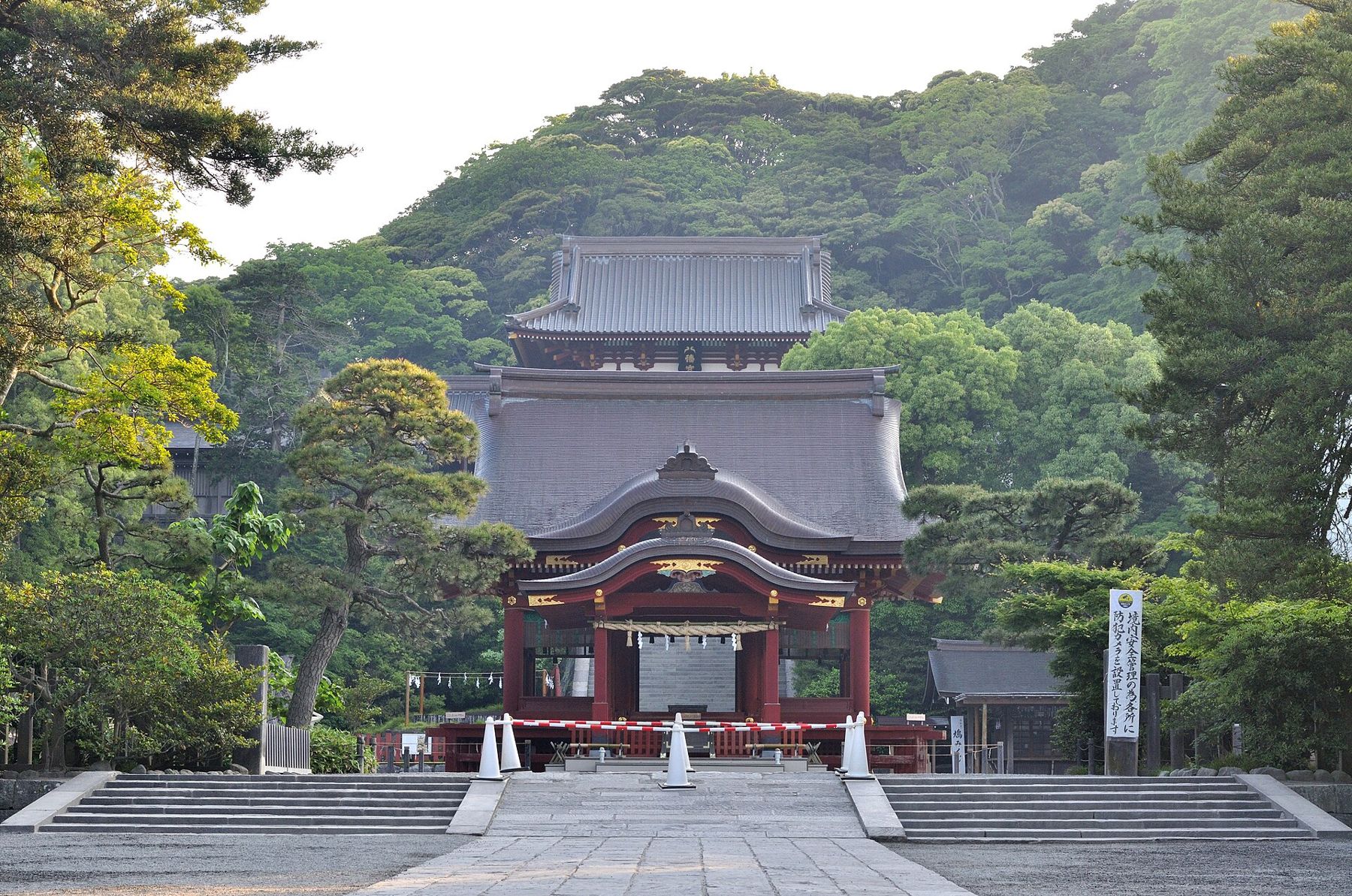
The main hall stands at the top of a broad flight of stone steps, painted vermilion and framed by wooded hill. Below it are two ponds, one with three islands and one with four, said to stand for the Genji and Heike clans whose war brought Yoritomo to power. A great ginkgo tree that stood beside the steps for centuries fell in a storm in 2010; new shoots from its stump are now growing into young trees.
The usual shrine courtesies apply. Bow at the torii, walk to the side of the path, rinse hands and mouth at the basin, and at the hall bow twice, clap twice and bow once more.
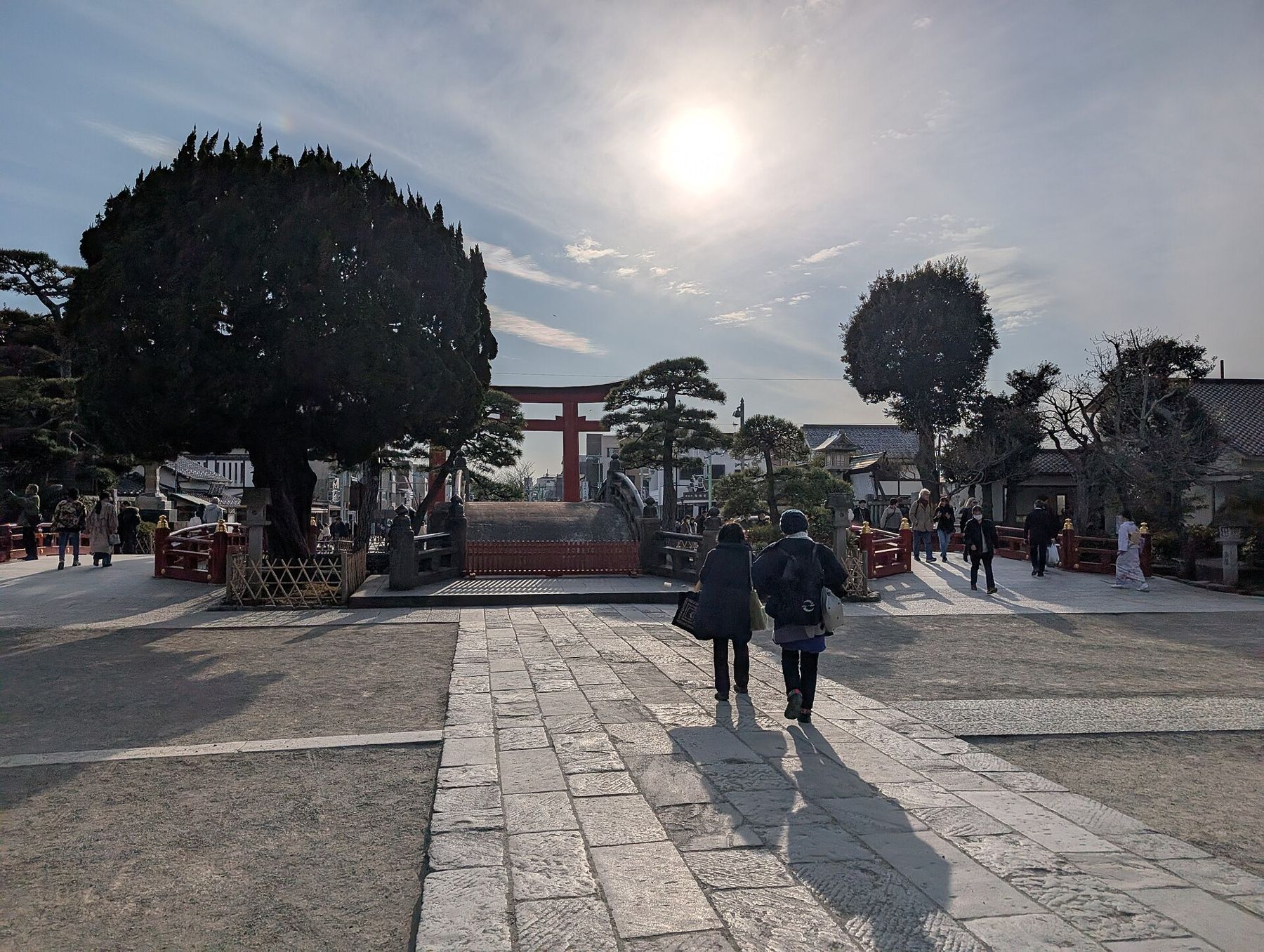
From the shrine, Komachi-dori, the busy lane parallel to the main avenue, leads back to the station. It is full of food stalls and souvenir shops; by late morning it is shoulder to shoulder.
Four stops on the Enoden
From Kamakura station, the Enoden is a small green-and-cream electric railway that runs west along the coast to Fujisawa, partly squeezed between houses and partly with the sea right beside the track. Ride it three stops to Hase. The whole line is a pleasant ride if you have time, and it carries on to the island of Enoshima, which makes an easy add-on if your legs are fresh.
On a weekend afternoon the Enoden can fill to the doors, and queues form at Kamakura station. Riding it in the morning or at midday, before the beach crowds turn for home, is far easier.
The Great Buddha and Hase-dera
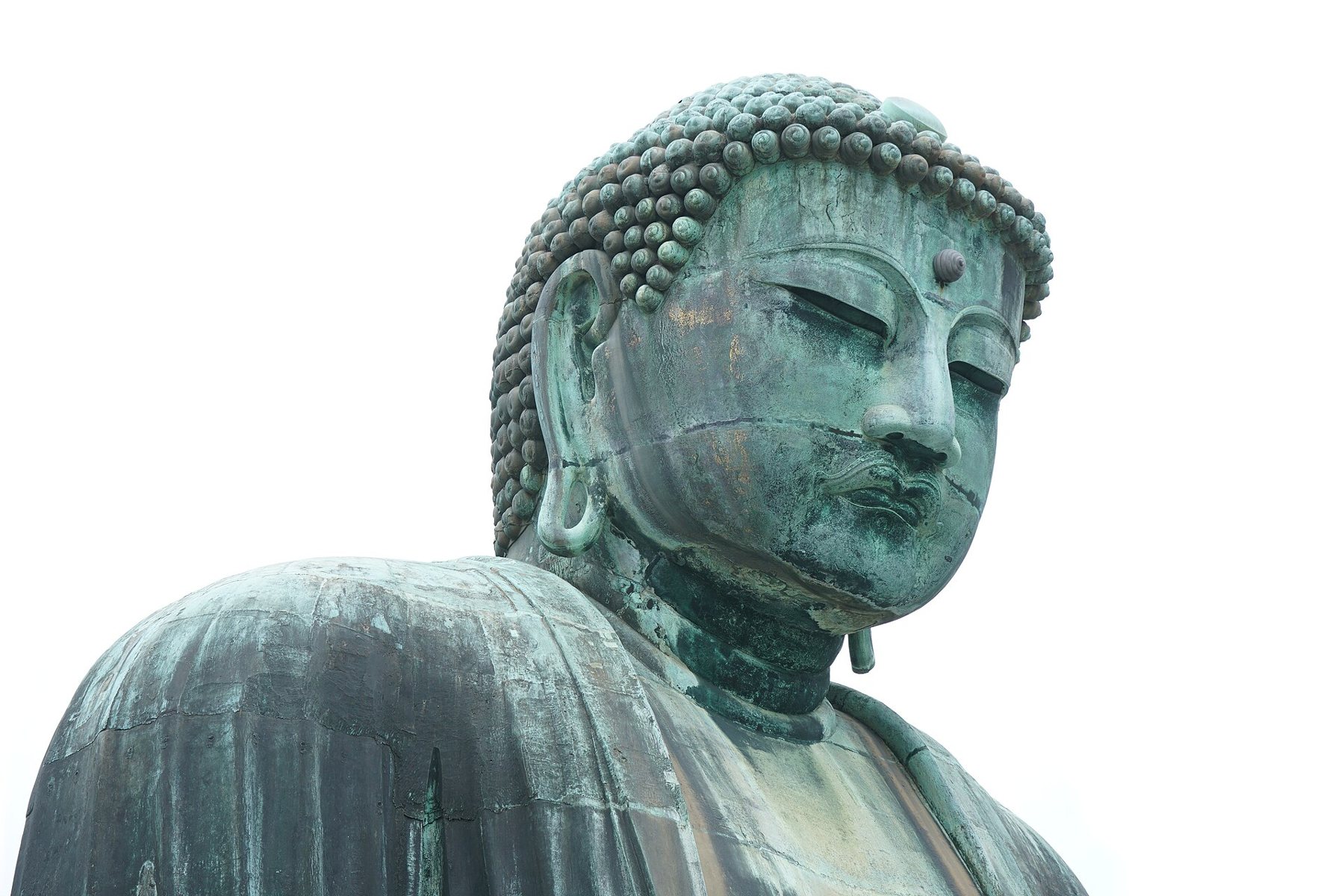
The Great Buddha of Kamakura sits in the grounds of Kotoku-in, a few minutes' walk from Hase station. It is a seated Amida Buddha, cast in bronze in the 13th century, a little over eleven metres tall. It was once housed in a great wooden hall, but the hall was destroyed by storms and finally washed away by a tsunami at the end of the 15th century. The Buddha has sat in the open air ever since.
The Buddha has sat in the open air ever since.
That open setting is what makes it. Walk around the back to see the joins between the cast sections and the two window-like openings in its back, and look closely at the face: the head is tilted slightly forward, so the expression is calm from below rather than from a distance. At times visitors can step inside the hollow body for a small fee; check before you go if that matters to you.
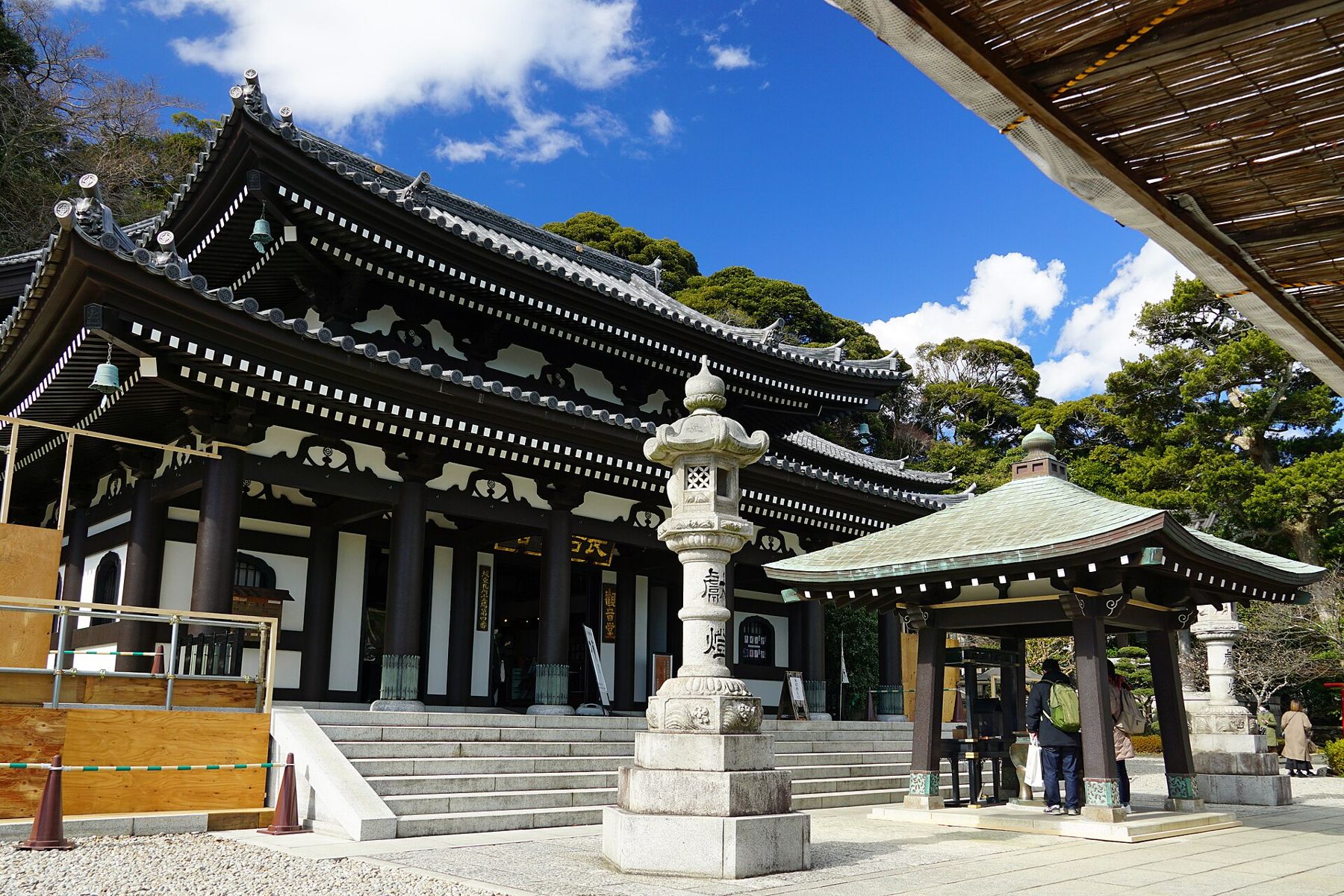
Hase-dera, a short walk back towards the station, is a temple of the Jodo school built up a slope. Its main hall holds a tall gilded wooden statue of the eleven-headed Kannon, the bodhisattva of compassion. Lower down, hundreds of small stone Jizo statues stand for children who died before birth, many dressed in knitted caps. Further up, a terrace looks straight down the coast over Yuigahama, and in June a hillside path fills with hydrangeas. That path usually has timed entry or long queues in flower season, so plan around it.
Down to Yuigahama for the end of the day
Walk south from Hase-dera for ten minutes and you reach Yuigahama, the long sandy beach that faces Sagami Bay. In summer it is a busy swimming beach with seasonal huts; out of season it is mostly dog walkers, surfers and people watching the light. On a clear evening in winter you may see Fuji to the west and the island of Enoshima on the horizon.
From the beach it is a flat walk back to Kamakura station along streets of old wooden houses and small gardens. The back lanes away from the main roads are some of the quietest walking in town.
Walking routes and crowd sense
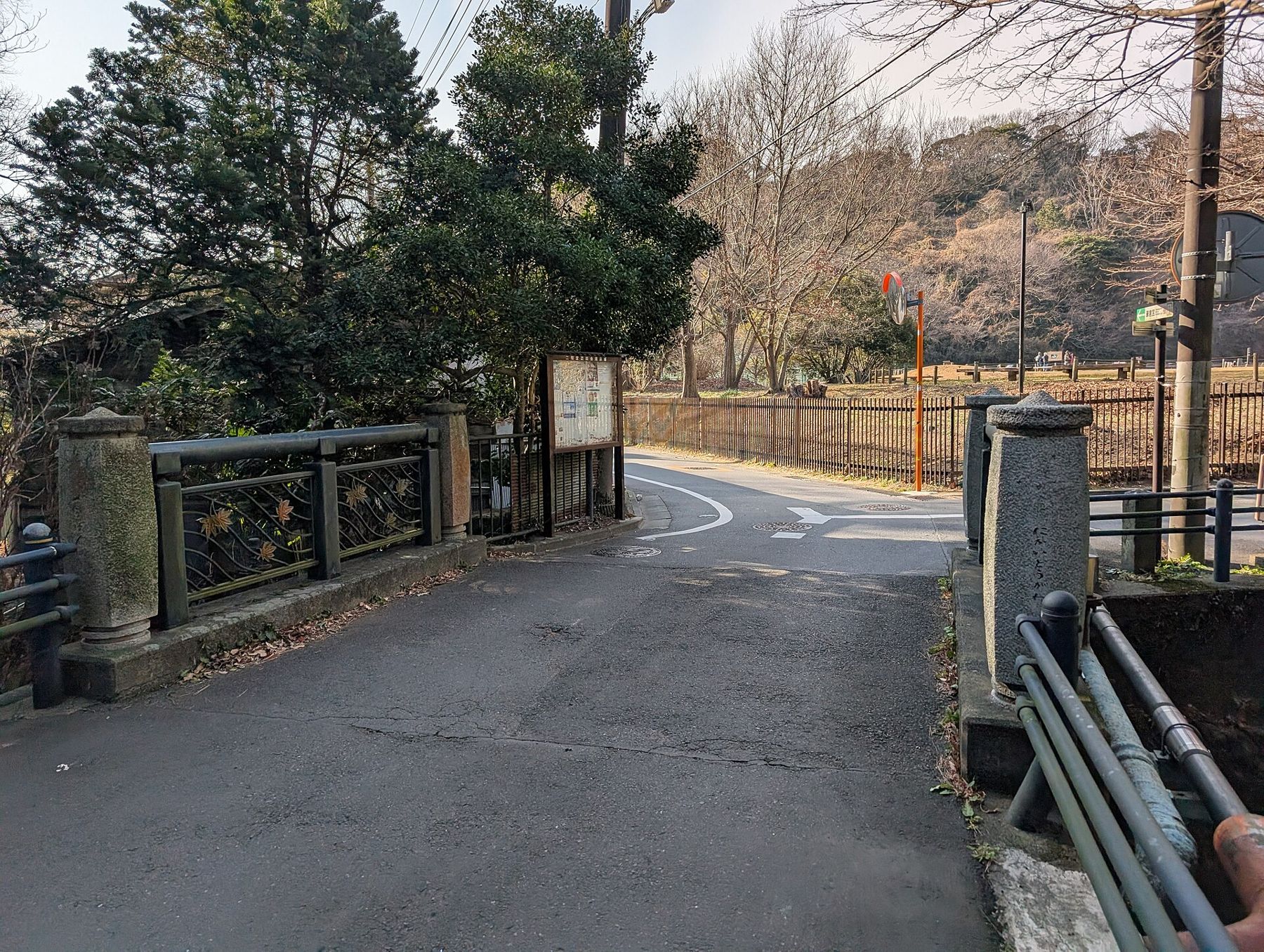
Kamakura is threaded with hiking trails along the hill ridges. The best known runs from Kita-Kamakura to the Great Buddha, about an hour and a half through woods and past small shrines. Trails can be closed after heavy rain or storm damage, so check before you set out.
- Begin early, ideally on a train that leaves Tokyo before eight; the advice in first trains, last trains and the suitcase question applies here.
- Do the east side first and the Hase side second, which runs against the main flow of visitors.
- Avoid Golden Week, the peak of the hydrangea season and the busiest maple weekends unless you accept slow going. The guide to the weeks that change a day out lists them.